Hermes Agent 0.22: the first minutes decide adoption

24,200 commits to a chat that works before an API key is added. Measure enterprise AI time to use and find where users drop off.

  • What was released, and the work behind it
  • The entry threshold as a metric
  • The enterprise threshold is different
  • Connectors are integration

Trigger

  1. On October 13, Nous Research released Hermes Agent v0.22.0 with the subtitle The Threshold Release.

  2. After a fresh install, the user enters a setup chat where the agent guides them step by step.

  3. The chat uses a free trial model, so newcomers talk to the agent before creating an API key.

  4. For a company adopting AI, this suggests a practical rule: the first minutes determine an agent’s fate, and they deserve most of the engineering attention.

What was released, and the work behind it

  1. Nous Research’s release notes quantify the work between v0.21.0 and v0.22.0: about 24,200 commits and 6,080 merged pull requests; 15,600 changed files; roughly 2.05 million added and 1.14 million deleted lines; 7,180 closed issues; and 2,520 contributors.

  2. The ratio is particularly interesting: 56 lines were deleted for every 100 added.

  3. We interpret these figures as substantial rewriting alongside new features. The release notes do not explicitly say so; this is our interpretation.

  4. The authors highlight two user-facing changes: guided setup in a chat using a trial model, and connectors letting the agent operate inside familiar applications.

The entry threshold as a metric

  1. At KT.Team, we evaluate tools using TTU, time to use: time from installation to the first useful result.

  2. The typical open-source agent setup has five steps: install it, register with a model provider, add a payment card, create a key and enter it in configuration.

  3. Only then does the user receive a first answer.

  4. Some people abandon the attempt at every step.

  5. We have not seen Nous’s funnel data, so specific drop-off rates remain our hypothesis.

  6. We have seen a different pattern in clients’ internal products: employees put off tools requiring several actions before a first result and never return. Nous removed the most expensive first step: obtaining a key and paying.

  7. It looks like a convenience improvement, but the team has changed the order of the transaction.

  8. Users first experience the agent’s value and only then pay.

The enterprise threshold is different

Employees do not need their own key: IT provides model access. The threshold is access to data.

An agent without access to 1C, PIM, CRM and electronic documents gives generic answers. After the third one, an employee closes the window.

A typical pattern we see before clients come to us is a three-month pilot, an impressive final demo and no business metric moved.

The business pays for results

An AI project that moves no metric remains theatre, and the finance director will hold its sponsor accountable.

We therefore measure enterprise TTU in days: from the decision to try the agent until it answers a question using live company data and someone uses the answer at work.

Assess where AI can deliver impact in your process

Connectors are integration

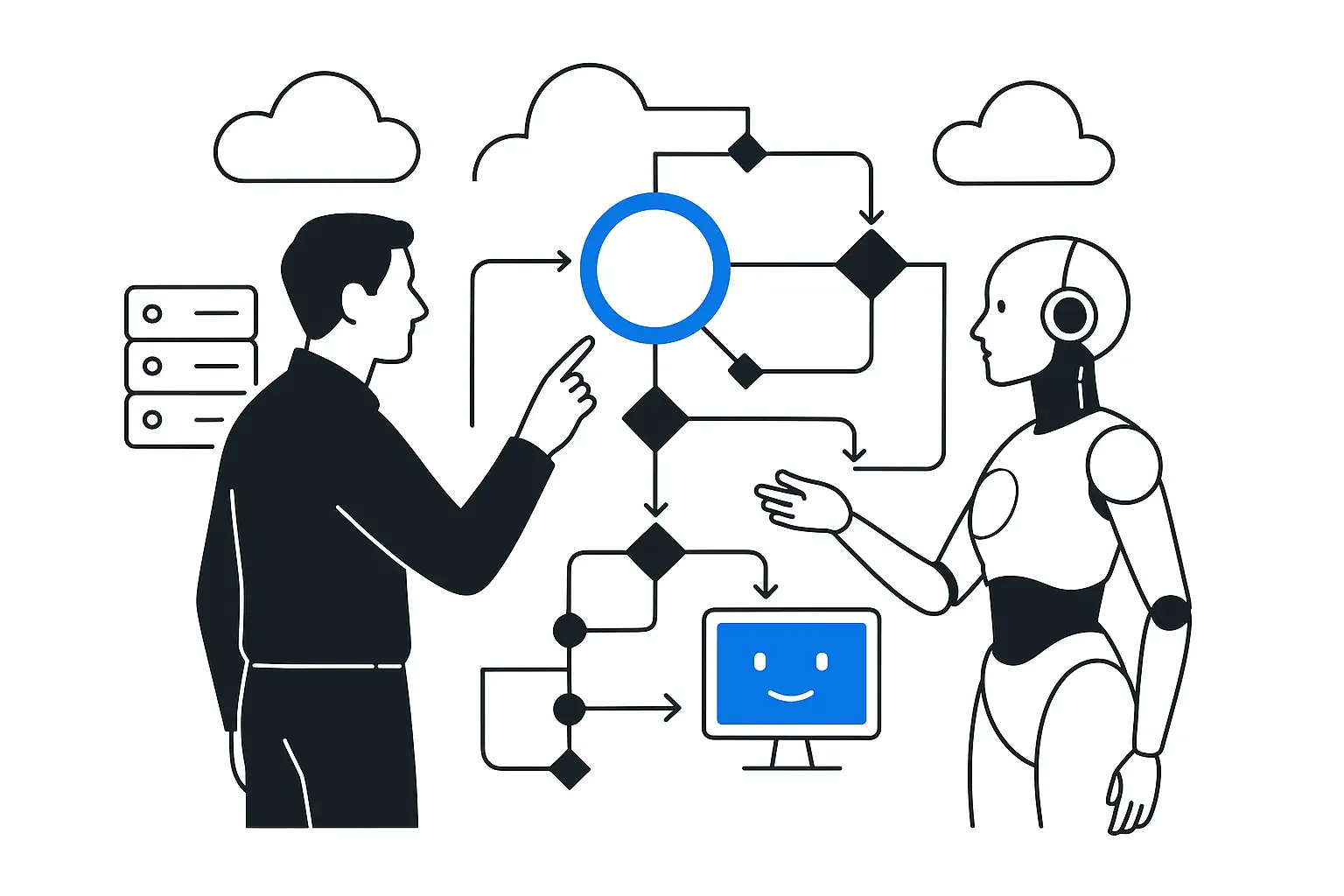
  1. Hermes connectors do the same job as corporate integrations: they let the agent read and change data where people work. Corporate systems use the MCP standard, Model Context Protocol, for this.

  2. The agent uses it to call external tools: find an order in 1C, update an attribute in Pimcore or Akeneo, or check an electronic document’s status. In AI-native integration projects, we assemble four components: - MCP servers in front of accounting systems. Every operation has an explicit contract, permissions and an audit log.

  3. The agent sees only permitted operations, without gaining access to the entire database. - A message bus between the agent and accounting.

  4. Requests pass through Apache Kafka or Datareon.

  5. The bus absorbs spikes in agent requests, keeping 1C available during working hours. - LLM & Security Gateway.

  6. The gateway routes requests to Claude, GigaChat, YandexGPT or Qwen, masks personal data before external API calls and records every call for audit. - RAG over internal documents.

  7. Policies and contracts enter the model context with a link to

Source

, and an employee can verify the answer.

A simple experience takes substantial work underneath

Nous built the setup chat that opens and answers immediately over a cycle of 24,000 commits.

Release tags reveal how the process works.

The team withdrew rc.2 and marked it abandoned; rc.3 became the release. Candidate metadata has autopublish: false: builds are automated, but a person approves publication.

The team also publishes canary builds and released a 0.22.1 candidate the day after the stable release.

This is a mature delivery cycle:

  • canary builds
  • release candidates
  • the ability to withdraw a build
  • a human sign-off before release

An enterprise agent needs the same cycle

In our PIM projects, agents write product descriptions, assign assortment taxonomy and fill search facets.

We test every prompt or model change against a reference set of product cards and measure the share that needs no manual correction.

A change reaches production only if that share has not declined.

Without this system, updating a model becomes a lottery played against the live catalogue.

Verdict

Nous Research spent a 24,000-commit cycle ensuring that newcomers received an answer before paying. Companies should apply the same approach to AI initiatives: count days to the first useful answer on live data and invest in connectors, a gateway and quality checks. Model selection takes the least time. A team shortening that journey to two weeks can demonstrate a result this quarter.

By quarter-end, a team that skips this work will present another demo at a meeting.

Source

Hermes Agent v0.22.0 - The Threshold Release, Nous Research, GitHub Releases. The project is available under an open licence; see the repository for terms.

Discuss the article: Hermes Agent 0.22: the first minutes…

Enter your email or phone number so we can get back to you.

Send via: