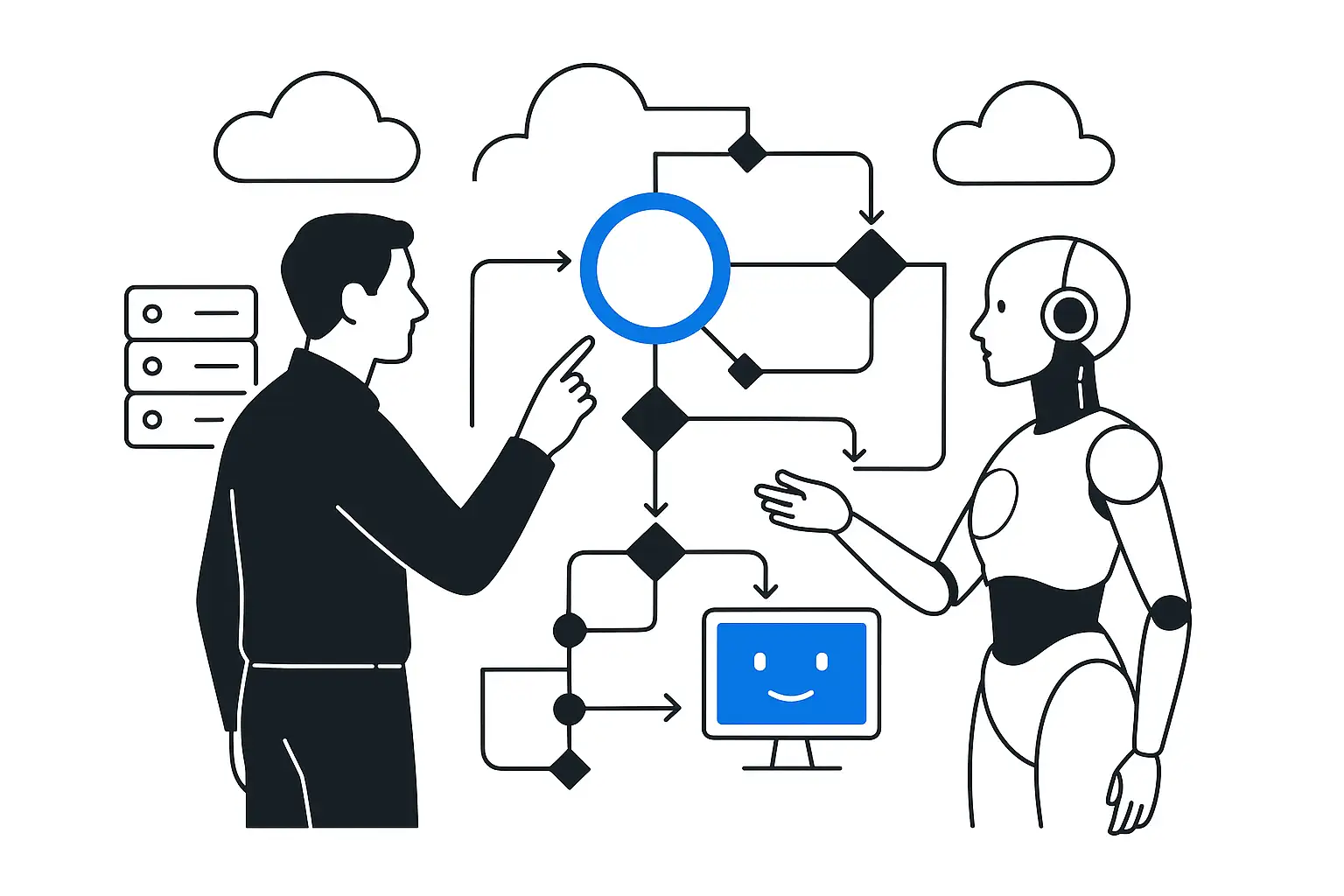
Technology is a set of concrete solutions for your challenges that directly affect profit and competitiveness. 1. Smart algorithms and machine learning: AI learns from data and performs tasks that previously required human input. It predicts product demand, responds to customers in chats 24/7, finds hidden patterns for decision-making, and even detects fraudulent transactions.
2. Big Data and analytics: Big Data technologies do not just store information; they analyze it quickly and turn it into useful insights. You can see which products are in demand in different regions, how customers interact with your website, and where delays occur in the supply chain. This helps reduce losses from shortfalls by 10-15% and optimize logistics without increasing headcount. It is also important for accurate forecasting, effective marketing, and lower costs.
3. Cloud computing: Cloud services provide access to powerful software and storage over the internet. There is no need to buy and maintain your own expensive servers. You pay only for what you use and can easily scale resources up or down in minutes. This makes IT infrastructure flexible, lowers upfront costs, and speeds up the launch of new projects. 4. Internet of Things (IoT): Sensors on machines, in transport, and even in products transmit real-time operational data.
You can see where equipment overheats before it fails, track cargo location, or monitor storage temperature. This enables a shift from scheduled to predictive maintenance, reducing downtime and losses. 5. Blockchain: The technology creates a secure and immutable digital record of every transaction. In supply chains, it guarantees product authenticity, so you know exactly where the components came from. In finance, it simplifies and speeds up secure payments while reducing fraud risk.
6. High-speed networks (5G and newer): New communication standards enable instant transmission of massive amounts of data with minimal latency. This is critical for operating large numbers of IoT sensors in a factory or controlling autonomous vehicles in a warehouse. Without this speed, many modern technologies simply cannot reach their full potential. The impact of technology on business processes:
| Technology | Key applications | Business impact |
|---|
| Artificial intelligence | Predictive analytics, chatbots, document workflow automation, risk management, production optimization | More accurate decisions, lower operating costs, better service quality |
| Big Data | Market and customer analysis, logistics optimization, fraud detection | Deeper demand insight, lower costs, improved safety |
| Cloud | Deployment of enterprise systems (CRM, ERP), data storage and processing, software development | Lower CAPEX, faster innovation rollout, infrastructure flexibility |
| Internet of Things | Predictive equipment maintenance, smart warehouses, telemetry | Reduced downtime, optimized resource use, improved safety |
| Blockchain | Smart contracts, product traceability, secure payments, digital identity management | Greater trust, transparent chains, lower transaction costs |
Discuss your challenge with an architect