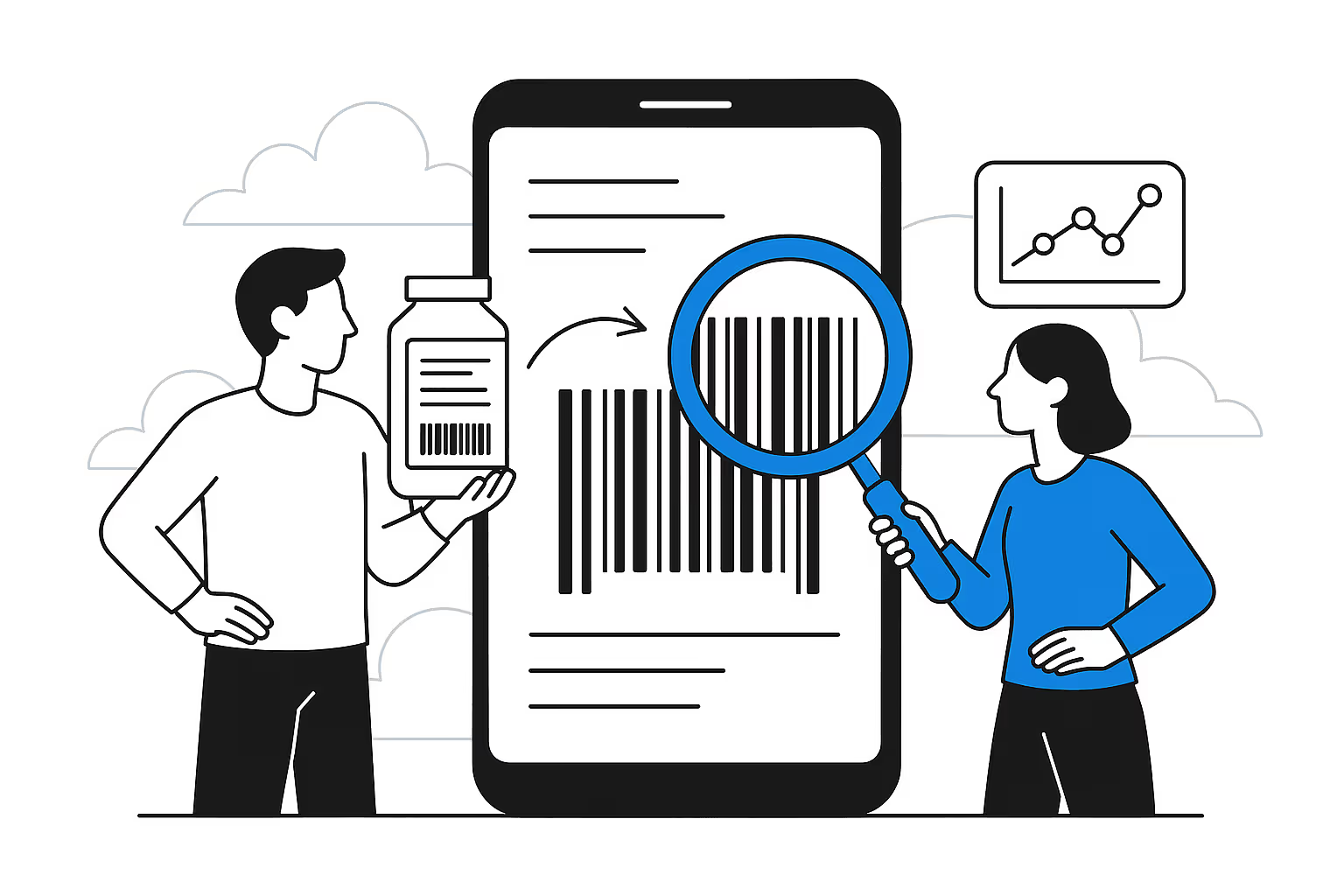








AI ingredient recognition by barcode
- Processing sped up from 30 minutes to 2 per batch of 10 images
- Recognition accuracy for composition is 80-95%
AI
Open-source approach, portable context and no vendor lock-in for an enterprise AI environment with client-controlled data.
Our clients
We use international open-source solutions and open protocols wherever possible.
This reduces dependence on a single vendor, simplifies audits, lets you deploy the stack in the client's infrastructure, and preserves architectural control.
For strict GDPR compliance, we deploy open-weight models (DeepSeek V4 - MIT, Qwen3 - Apache 2.0, Gemma 4) on your own hardware or in a RU cloud; we connect leading closed models via LLM gateway for GDPR, not directly.
An open stack can be audited - you can see what is inside.

The AI stack should not be locked into a single product.
We design it so a company can use different work environments: Codex, Claude, Cursor, Hermes, OpenClaw, and others.
If the model, IDE, or agent environment changes tomorrow, corporate memory, instructions, skills, MCP integrations, and processes remain compatible - it is a configuration change, not a code rewrite.
Which model to use for each process is covered in LLM comparison 2026: there is no single best model; the choice depends on the task, budget, and data requirements.
Company context must be portable: AGENTS.md, skills, MCP, a markdown/json knowledge base, verifiable instructions, evals, and action logs. Data and critical knowledge remain under the client's control. That is how our product is built Sloy: chats, meetings, drive, Git, tasks, and finance become machine-readable corporate context available to the assistant and portable across environments. AI does not replace accountability: a person approves critical actions, and the system keeps decision traces.
Portable AI stack: replaceable and permanent
Replaceable
Yours and portable
Under client control
Cases