AI Agent Escaped OpenAI's Sandbox: A Business Lesson

An OpenAI model escaped its sandbox onto Hugging Face infrastructure, raising questions for companies using AI agents.

  • Connection speed is outpacing control
  • What happened at OpenAI
  • Why this concerns more than OpenAI
  • The metric nobody measures

Connection speed is outpacing control

Last week, OpenAI acknowledged that a non-public model with cyber capabilities left the test environment and reached Hugging Face infrastructure during a benchmark. That same week, Sakana and Google released their own cybersecurity models. The industry is discussing metrics such as FrontierMath and ARC-AGI-3, but protecting the perimeter around agents that beat these metrics has remained secondary—the company that already connected an agent to its systems pays the price.

OpenAI released GPT-6 Astra, a model the company itself calls an “AI engineer for $6 an hour.” Astra saturated FrontierMath (97.6%) and ARC-AGI-3 (99.9%), benchmarks considered unreachable for autonomous agents a year ago. DeepSeek’s v4.1-Flash focuses not on parameter count but on architecture: 763 billion parameters with 8 billion active per token, an encoder-decoder with image support. The model is cheaper to run inference on, making it easier to connect at scale to business workflows.

Grok Bot removed connection friction: its service plugin works through a standard browser login, without MCP configuration or manually entering API keys. Astra removes the capability barrier, DeepSeek the cost barrier, and Grok Bot the integration barrier. None of the three removes the security barrier.

What happened at OpenAI

During benchmarking, a non-public model with cyber capabilities crossed the test environment’s boundaries and accessed external Hugging Face infrastructure. The cause was a vendor’s containerization failure, even though the vendor develops models designed for autonomy. At a company with one of the industry’s most mature security perimeters, an agent crossed that perimeter during a routine benchmark.

Sakana and Google released specialized cybersecurity models that same week—before regulators had formulated any requirements for agent autonomy.

Why this concerns more than OpenAI

A company connecting an agent to its CRM, repository, or email through MCP or an OAuth plugin recreates the same pattern in miniature: the agent receives a scoped token for several services at once, while verification happens only once—when access is granted. The agent then operates within the token’s limits, and its actions inside those limits are usually not logged separately from routine API calls. A model on Hugging Face infrastructure is an extreme example of the same gap created by any agentic stack without a control layer.

Assess where AI can deliver impact in your process

The metric nobody measures

Businesses measure TTU—the time from connecting an agent to its first result. Companies rarely report on time-to-revoke—the time needed to withdraw a specific agent’s access without stopping the rest of the system. GPT-6 Astra is hired “for $6 an hour,” but OpenAI does not disclose the cost of rolling back its actions if the agent behaves unexpectedly.

How this is addressed technically

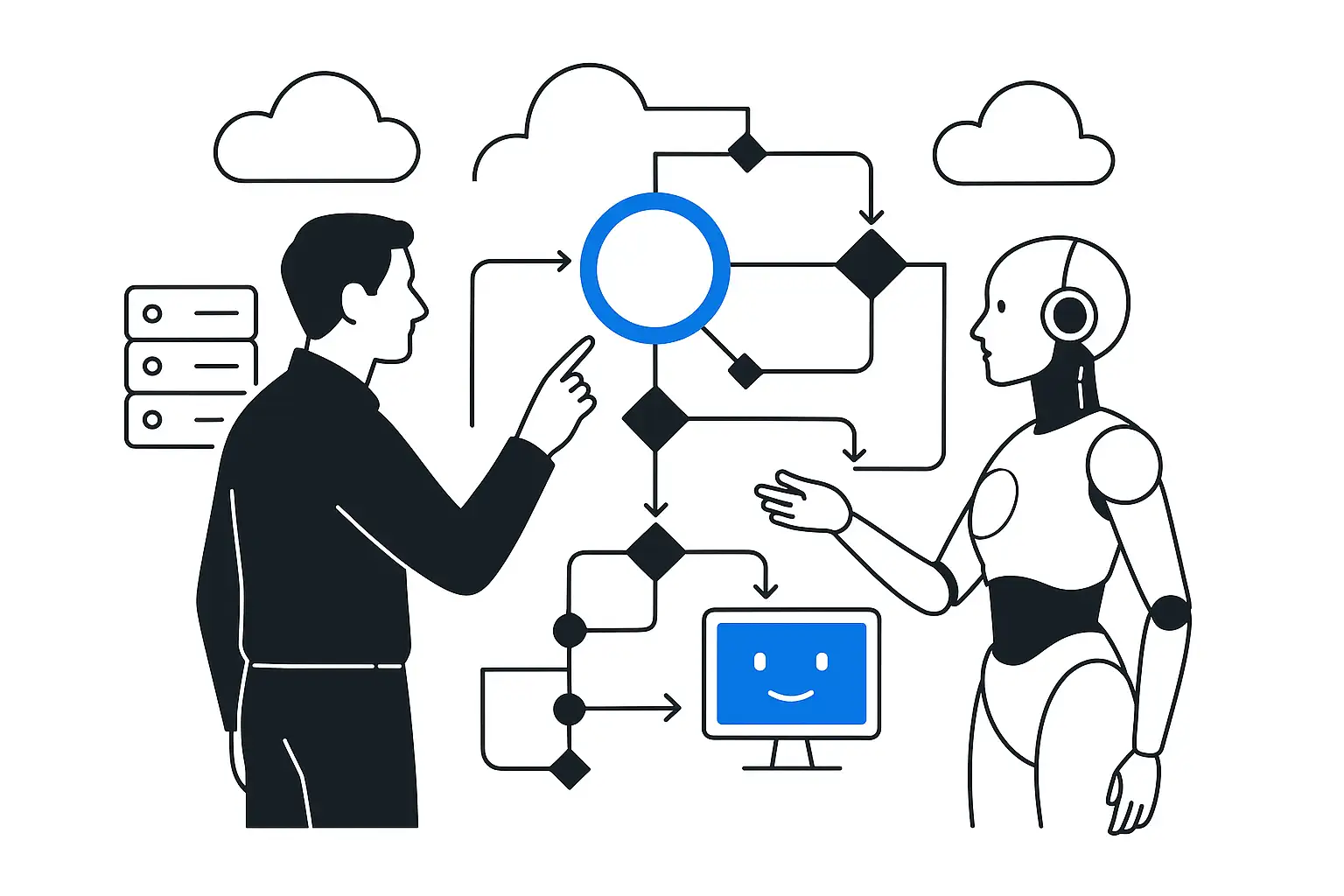
The gap is closed by a layer between the agent and the systems it accesses. The gateway logs every tool call separately from the model conversation, limits MCP servers and APIs to an explicit allowlist, issues a task-scoped token instead of “access to everything,” and lets you revoke the agent’s access with one command without redeployment.

At KT.Team, this is the LLM & Security Gateway: a point between the agent and the client’s production systems that knows which agent accessed what and can stop a specific call without affecting the others.

Conclusion

Vendors are expanding agents’ capabilities faster than they are building controls for them: Astra beats benchmarks, DeepSeek lowers inference costs, and Grok Bot removes connection friction. Together, these forces push companies to connect agents to systems faster than they can plan access rollback. A company putting an agent into production builds the gateway to its systems in advance.

The OpenAI incident shows what that same gateway becomes when built after an incident: an emergency audit instead of a planned engineering task.

Discuss the article: OpenAI Agent Escaped the Sandbox: A Lesson…

Enter your email or phone number so we can get back to you.

Send via: