Pi 1.0 and Pi Durable: Why AI Agents Need Extra Wrapping

Codemode, lazy tool loading, caching, and durable execution: how Pi 1.0 cuts agent costs and four questions to ask a vendor.

  • Where the pilot stops working
  • How This Is Solved Technically
  • The same idea in research
  • What This Means for Business

Trigger

In the episode AINews on Pi 1.0 and Pi Durable Latent Space writes that both Pi agent releases reached Hacker News's front page on the same day. Pi is a minimalist coding agent developed by Earendil. Anyone deploying AI agents in companies should read the version 1.0 changelog. It says almost nothing about a “smarter model.”

Almost all of these points concern the engineering layer around the model, which determines the agent's cost, response speed, and ability to complete the task.

What was released

According to Latent Space, Pi 1.0 introduces four key changes: Codemode with native MCP support. MCP (Model Context Protocol) is an open standard that lets an agent connect to external systems: databases, APIs, and accounting systems. - Extensions for virtual models. An extension registers a “model” backed by arbitrary logic, such as routing between providers. Lazy tool loading. - Cache warming. Pi Durable was released as a separate product, offering durable execution for agent tasks.

Where the pilot stops working

  1. This is the typical path of an agent project in a company.

  2. In a demo, the agent is given three tools and a short task, and the pilot succeeds. In production, the agent is connected to 1C, PIM, CRM, and a warehouse system, bringing the number of tools to forty. Sessions last an hour or longer.

  3. The agent responds more slowly, the token bill grows several-fold, and the task stops halfway because one of the APIs timed out.

  4. The manager sees the spending but not the result.

  5. After a quarter, the project is shut down and AI is labeled a failure. In stories like these, the model is usually not the problem.

  6. The context window is the agent's working memory, and every token in it is paid for on every call.

  7. Descriptions of forty tools, intermediate API responses, and step history fill this memory before the agent even starts the task.

Assess where AI can deliver impact in your process

How This Is Solved Technically

  1. ### Codemode In the traditional approach, the agent calls tools one by one, and each response enters the context in full. In Codemode, the model writes a short script: the script calls the required tools, filters the data, and returns only the result to the model. In a publication on code execution with MCP, Anthropic gave an example where this approach reduced usage from 150,000 to 2,000 tokens, a 98.7% reduction.

  2. Savings in a specific project depend on the task, but the order of magnitude is illustrative. ### Lazy tool loading

  3. The agent keeps a short tool catalog in context and loads the full description only for the tool needed at the current step.

  4. Forty connected systems no longer occupy memory during steps where they are not involved. ### Cache warming

  5. Providers cache the unchanged beginning of a request: the system prompt, instructions, and tool descriptions. With Anthropic, reading from the cache costs about 10% of the base price for input tokens.

  6. During cache warming, this prefix is sent in advance, so the user's first real request is cached and the response arrives faster. ###

  7. Durable execution is a long-established integration technique: after each step, the process state is saved, and after a failure, the process resumes from the last checkpoint.

  8. If an external API fails on the agent's thirtieth step, durable execution allows that single call to be retried.

  9. Without it, the task must be restarted and the tokens paid for a second time.

  10. This describes the principle; the implementation in Pi Durable should be verified in the project documentation.

The same idea in research

  1. Around the same time, Latent Space published an interview with Alex Zhang from MIT about recursive language models (RLMs).

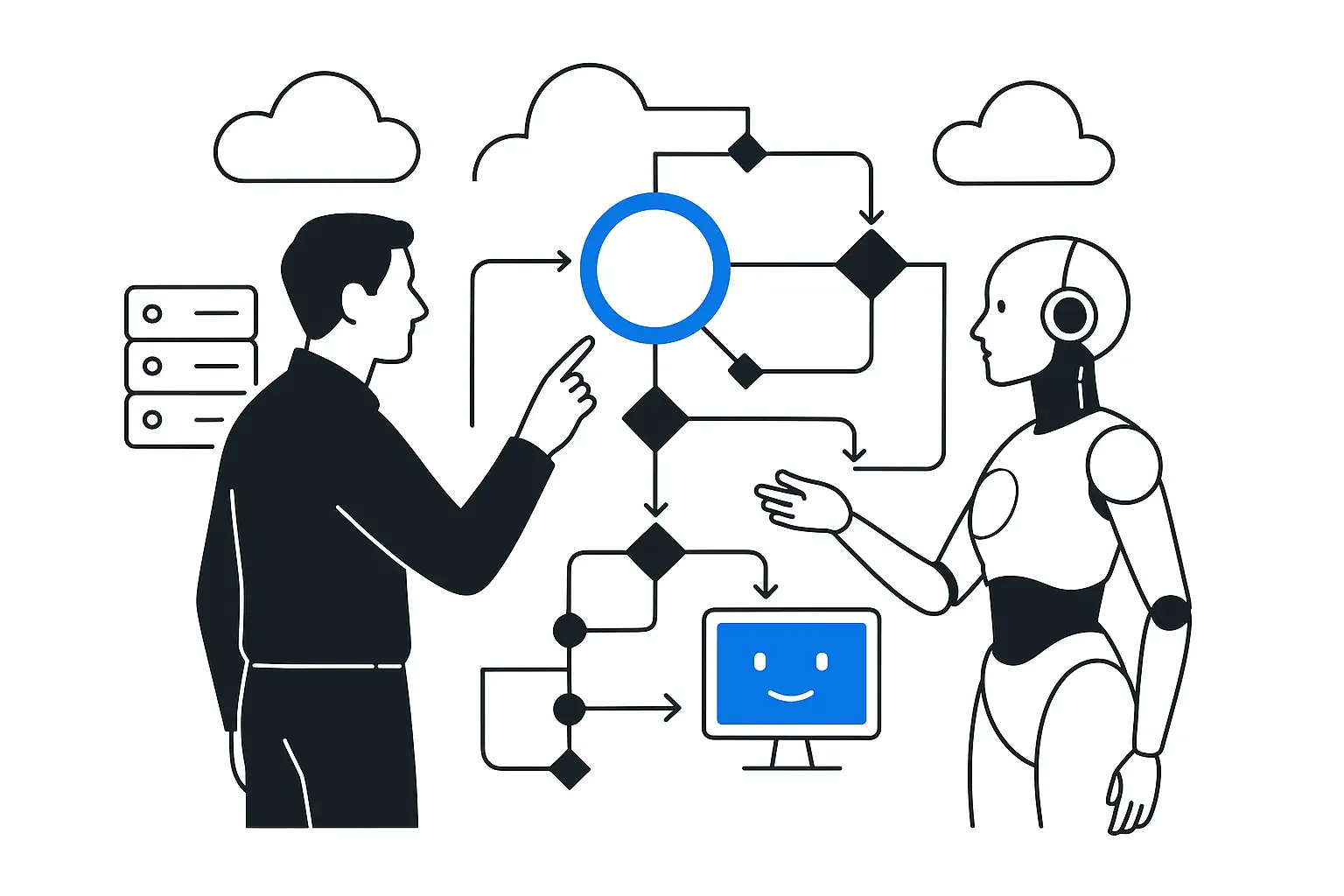
  2. In this approach, the long context is stored as a variable in the code execution environment.

  3. The model writes code that examines this context, splits it into parts, and recursively calls itself on the fragments.

  4. This is the same idea as in Codemode: the model manages its memory through code and does not load unnecessary content into it. Latent Space ranks

  5. Zhang alongside the podcast's previous guests. Shunyu

  6. After its 2024 release, Yao created Operator at OpenAI and now serves as Tencent's chief AI scientist.

  7. Jack Morris, a 2025 guest, became a co-founder of Engram, and the company was valued at $600 million. OpenAI, Tencent, and venture investors pay for people who know how to manage model context.

What This Means for Business

When choosing an agent platform or vendor, ask four questions:

How many tokens are spent on tool descriptions before the task begins?

Can the agent combine calls in code, or does every API response enter the context in full?

What share of requests reaches the cache?

What happens if the task fails on the thirtieth step? If the vendor cannot answer these questions with figures, the budget will be spent on tokens and restarts. At KT.Team, we address these challenges in AI-native integration projects. Agents connect to 1C, Akeneo, Pimcore, and Kafka buses through MCP, and we keep a focused set of tools for each task.

LLM & Security Gateway works like virtual models in Pi: requests have a single entry point, while the gateway routes each request to Claude, GigaChat, or YandexGPT based on the data and price, masking personal data before it leaves the perimeter. In batch tasks—generating product card descriptions and tagging taxonomy and facets across thousands of SKUs—resilience matters more than the speed of one response: a failed pipeline resumes from where it stopped.

Conclusion

Pi 1.0 shows where agent developers are competing today. The players' models are broadly similar, and new ones will be released within six months. Time to useful results and task cost depend on how engineers assemble context, caching, tools, and failure recovery. A company that chooses an agent by model name will pay for a demo. A company that demands token and fault-tolerance metrics will get a working process.

Discuss the article: Pi 1.0 and Pi Durable: Why the Budget Goes to Overhead

Enter your email or phone number so we can get back to you.

Send via: