How we cut token costs without losing quality

How KT.Team reduces AI task costs: short context, RTK, Caveman, Cavecrew, caching, batch processing, and complexity-based routing.

  • Where tokens typically burn
  • Short context instead of an archive
  • Threads must not become walls of text
  • Compressed responses without loss of meaning
  1. 06/28/2026 Tokens become expensive not at generation time, but earlier: when you feed the model an extra archive, a long log, repeated rules, an overly broad context, and ask for a large report where a three-line answer is enough.

  2. That is why we reduce cost not through a single prompt, but through workflow design.

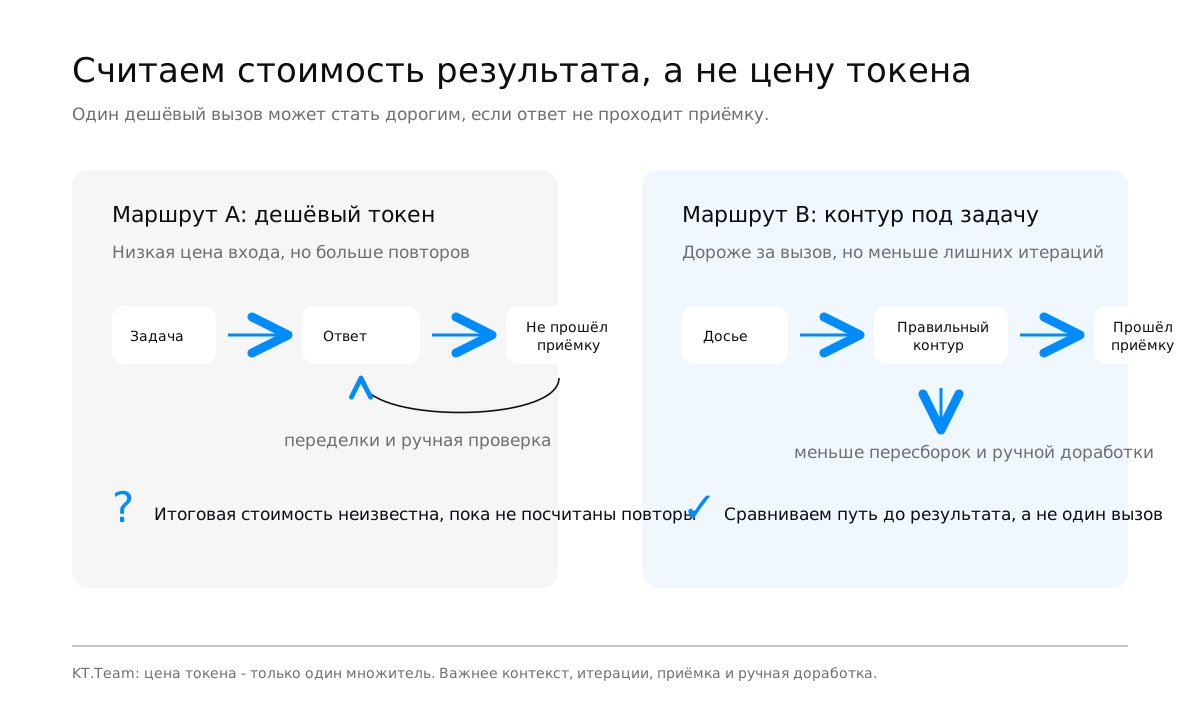
  3. We compare not the price per million tokens, but the cost of a finished result: how much context, how many calls, iterations, and manual rework it takes to get an answer of the required quality.

  4. This logic extends our earlier breakdown choosing an LLM for your process and budget: the model matters, but task routing drives costs more often.
Cost of the outcome matters more than token price

The provider bill shows only part of the picture. In a real process, context, number of calls, iterations, and manual rework are added on top.

How we cut token costs without losing quality
Cost of outcome: context, calls, iterations, manual rework, and token price all add up to the total cost of an AI task

Where tokens typically burn

Overspending is almost never caused by a single expensive call — it is usually several weak decisions surrounding it.

LossHow it looks in practiceWhat we change
Excess inputEntire documents, logs, or conversation histories are stuffed into the promptBefore the task, we assemble a short brief: facts, constraints, source references
Rule repetitionThe same instructions are paid for again in every requestMove rules into persistent context, templates, or cacheable prefixes
Long outputThe model writes an explanation when a list of edits is neededSpecify the response format upfront: finding, solution, next step
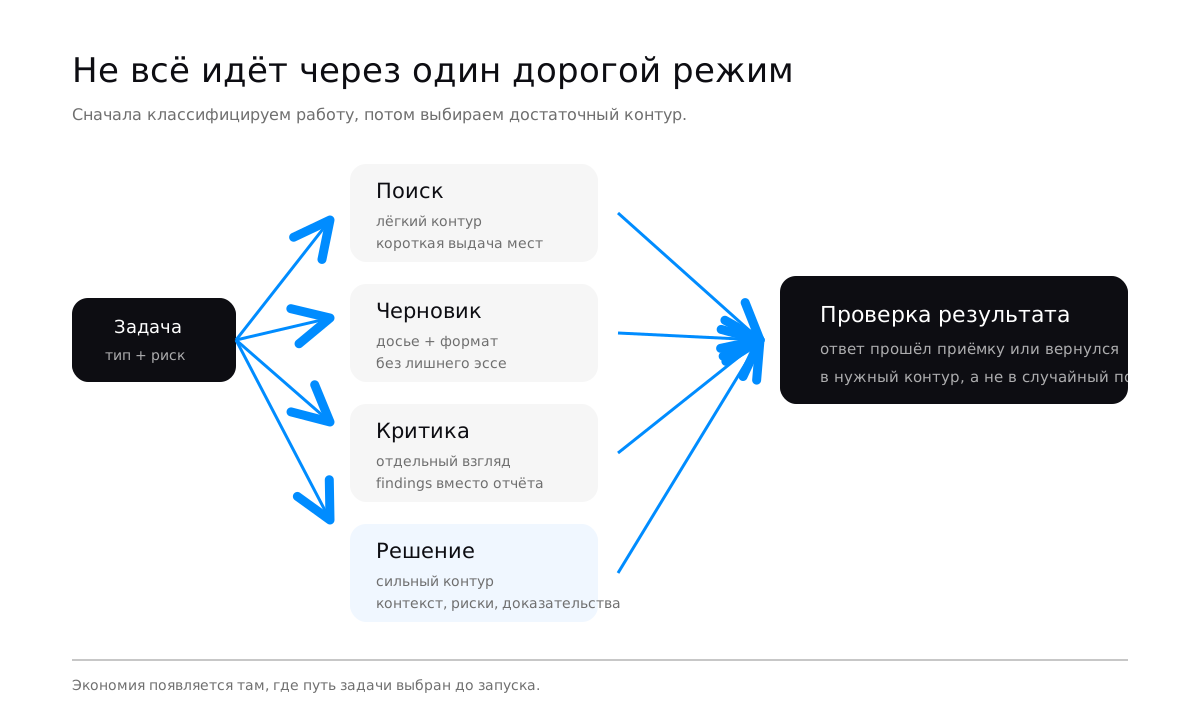
Wrong pipelineRoutine inventory is handed to the most expensive modeWe separate search, drafting, critique, and final decision
No acceptance checkThe answer looks good but fails validation and goes back for a retryDefine quality criteria before the run, not after reviewing the output

Savings come not from a single technique but from a routing strategy:

  • what to feed the model
  • which tier to choose
  • how much output to request
  • what to reuse

Short context instead of an archive

Context should be a decision brief, not a full project archive.

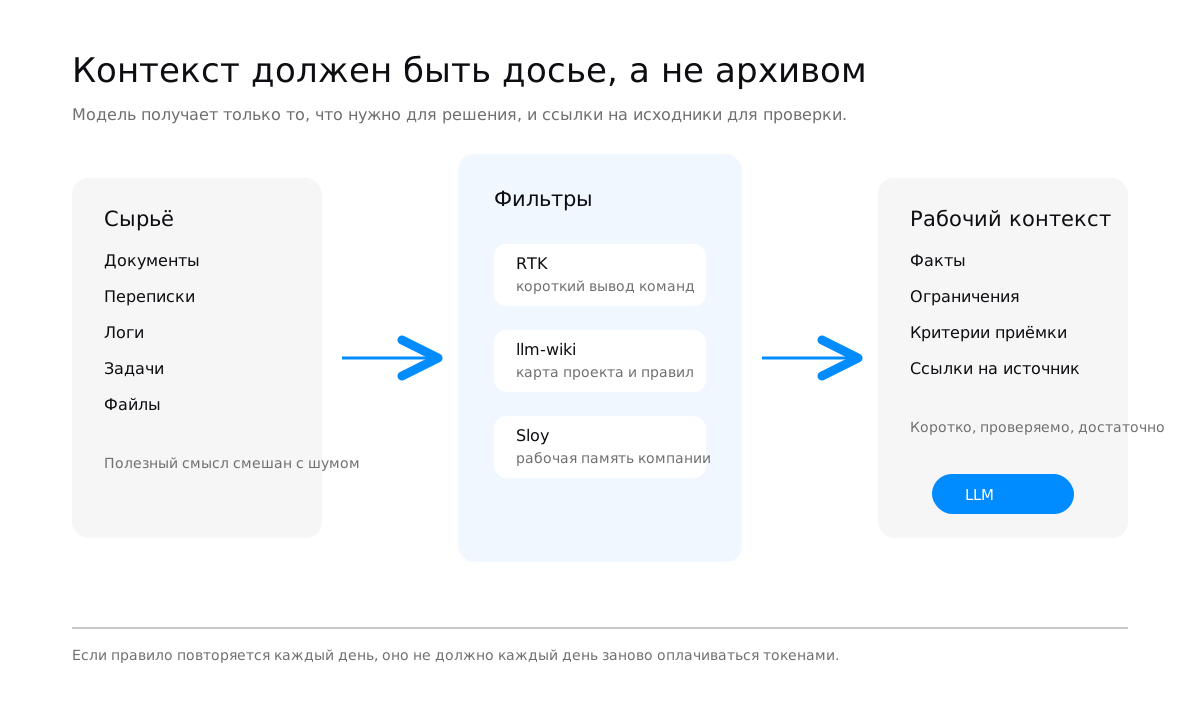
If every request starts with reading dozens of pages, conversations, and logs, the team pays for the same knowledge over and over. In llm-wiki we structure the project so the agent first sees a map: README, rules, key documents, decisions, and source links. Sloy extends this to the company's working memory: conversations, meetings, tasks, files, and finances are converted into verifiable compact representations.

In our Sloy product materials, the benchmark for a routine operation is 2–3K tokens with a prepared context.

This is not a universal guarantee: in a client project the figure is calculated individually.

The principle matters: the sooner a company converts raw material into a structured reference, the less it pays for re-reading the same information.

How we cut token costs without losing quality
Context filter: raw project material is distilled into a short, verifiable brief for the AI task

Threads must not become walls of text

Long command outputs are dangerous because they look useful

They do contain the needed line, but around it there are hundreds of lines of noise: progress, repeated headers, long lists, diagnostic tails. RTK is needed as a filter between the tool and the working context.

It does not "boost intelligence" and does not replace engineering review.

Its job is simpler:

  • do not show the model the entire stream
  • if a short result is enough to solve the task
  • errors
  • a few lines around it

In practice, this changes the discipline of how work is done.

A broad search should return the found locations, not the entire archive of matches.

A check should return a status and failure reason, not the full log.

A retry is not blind when the first failure was caused by how the command was formed.

Compressed responses without loss of meaning

Many tokens are spent not on facts, but on operational overhead:

  • greetings
  • overcaution
  • repeating the task brief
  • long transitions between obvious steps

Inside the workflow, this is not politeness, but paid noise

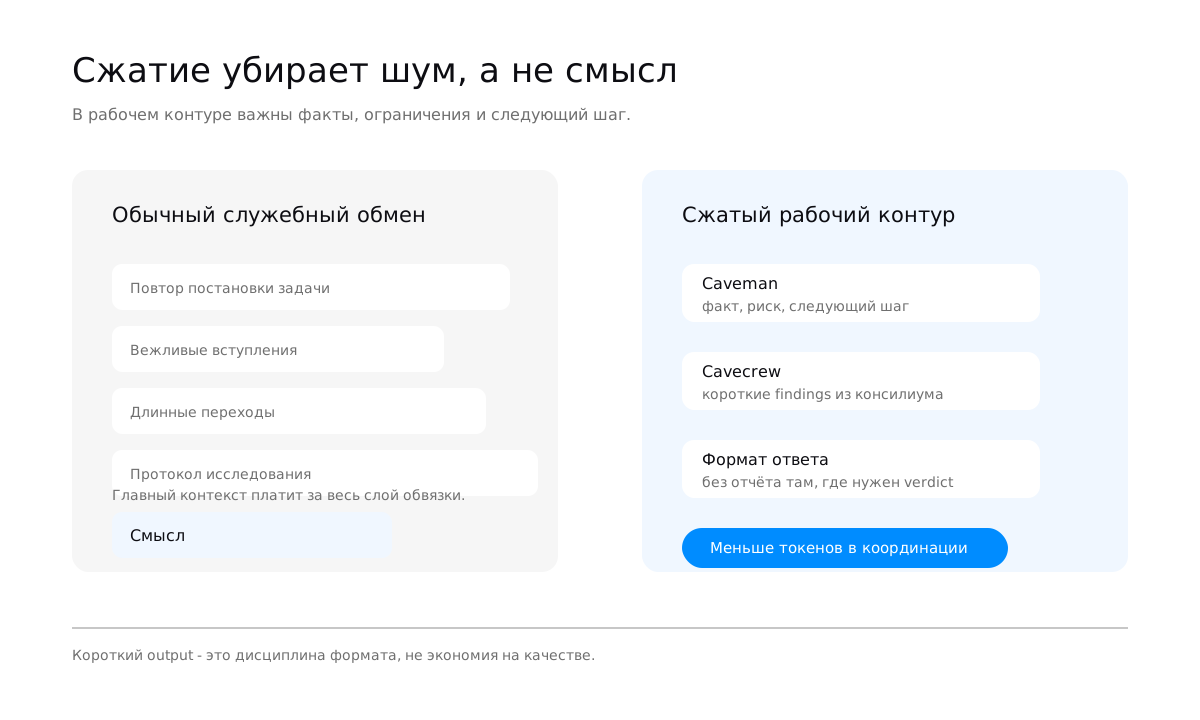
Caveman removes this layer. In light mode, normal sentences remain, but filler, hedging, and repetition of the obvious disappear.

The answer is grounded in facts: what was found, what is broken, what the risk is, what the next step is. Cavecrew applies the same discipline to a multi-agent panel.

If a separate participant does the broad check, the main context gets not an essay on the research process, but short findings:

  • path
  • line
  • problem
  • action

This matters in long tasks: the main loop should retain decisions, not excavation logs.

How we cut token costs without losing quality
Utility layer: RTK, Caveman, and Cavecrew reduce coordination noise and return compact findings

Not every task deserves the most expensive pipeline

An expensive model should not be a universal workhorse for every small task. A workflow contains different task classes, and each has its own sufficient tier.

Task typeSufficient tierWhy it costs less
Find the place in the projectSearch, RTK, compact match outputThe main context receives a list of locations, not the full search result
Write a draftShort brief, response format, length constraintWe do not pay for extended reasoning where a first draft is sufficient
Check riskA dedicated critic or a panel with short findingsThe strong model receives only contested sections
Make an architectural decisionFull context, evidence, explicit constraintsYou cannot cut corners on comprehension here: a mistake costs more than the tokens
Process many similar tasksBatch processing and stable output formatNon-urgent operations go to a cheaper asynchronous mode

Some tasks need no committee. Others are too risky to assign to a single agent. Savings come from making that choice up front.

How we cut token costs without losing quality
AI task routing: search, drafting, critique, architectural decisions, and batch processing go through different pipelines

Assess where AI can deliver impact in your process

Repeated content should not be paid for every time

Caching is useful not because it is a technical trick, but because a business should not pay twice for the same meaning. Major providers already have pricing mechanisms for this: cached input, prompt/context caching, batch API for non-urgent tasks. Terms change, so before implementation we check the pricing and limits as of the calculation date. Three rules matter in practice.

Three rules for caching and batch

Stable prefix

Rules, roles, response format, and static reference data must be sent identically. Shifting dates, unsorted lists, and random changes break the cache.

Async processing where it is acceptable

Overnight document checks, batch classification, bulk card processing, and archive reviews do not require an instant response.

Short output

Output is often significantly more expensive than input, and reasoning tokens cost money too. If you need a verdict, do not ask for an essay.

What we measure in a project

Without measurement, "token savings" quickly becomes a slogan. So we look not just at the provider bill, but at the full path a task takes to reach a result.

MetricWhy it is needed
Input and output volumeShows where context or output bloats
Share of repeatable contextShows caching potential
Share of tasks that tolerate batch processingShows how much work can be moved out of interactive sessions
Success rateShows how many responses pass acceptance without manual rework
Manual reworkShows the hidden cost of a "cheap" response
Errors and incidentsShows where compression became unsafe

The impact of Caveman, RTK, Cavecrew, llm-wiki, batch, and cache is measured within a specific process. The same toolset will produce different economics in development, support, legal analysis, content, and analytics.

Where we do not cut

Compression does not mean a thin response. It means no coordination noise. But there are areas where brevity is dangerous.

Areas where brevity is dangerous

We cut noise, not evidence

.

What this delivers for the business

When the cost of a single AI iteration drops, more than just the token bill changes.

Teams test hypotheses more often, update policies faster, run cheaper reviews, and scale AI to dozens of users without friction.

For KT.Team this ties into a broader approach: small teams of 3–7 people, short TTU, loose coupling, and accountability for results. AI must not become yet another expensive monolith.

It must be part of a managed process: data is prepared, rules are not repeated, tasks are routed, and output is validated. If your team already uses LLMs in development, support, or operations but iteration cost and quality are unpredictable, KT.Team can trace the task route and show where tokens burn: in context, tooling, routing, or workflow architecture.

Conclusion

Tokens only get cheaper when the process stops being ad hoc. Stop sending unnecessary data, stop recomputing what can be cached, stop requesting full reports instead of short answers, stop routing simple tasks through the most expensive model, and stop cutting corners where an error costs more than the savings. That is how AI cost stops being a surprise and becomes an engineering metric.

Sources

Checked on: 28.06.2026

Discuss the article: How we cut token costs without…

Send via: