













Client
Latvia's largest general-purpose online store with more than 300,000 SKU, headquartered in Riga, with offline retail locations.
Task
The client wanted all information about products, suppliers, and item master records to be stored in a single database. It was also necessary to take into account that:
It was also necessary to automate the product ID assignment process, which had previously been done manually.
- the same product can be sold by different suppliers at different prices;
- Each supplier may provide a different description and specifications for the same product.
Akeneo PIM Integration
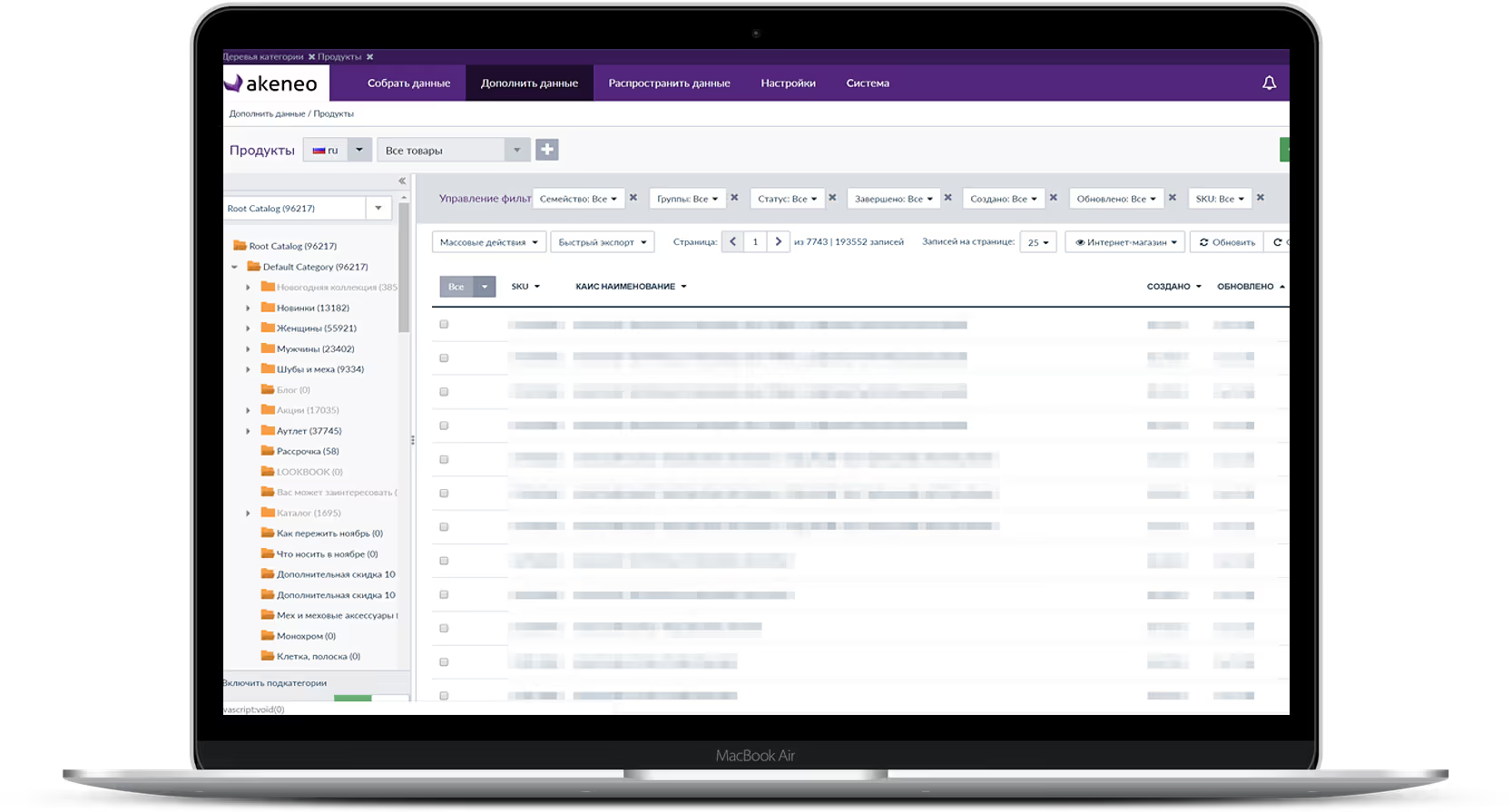
To store all product and supplier information in a single database with centralized management of marketing and technical data, we implemented an integration with Akeneo PIM. In addition to Akeneo's out-of-the-box functionality, we also developed new custom modules specifically for the project.
Review a similar project with an architect
Development of a Custom Suppliers Module
In the client's online store, the same product can be sold by different suppliers at different prices. To prevent duplicate products from appearing on the site and misleading customers, it was decided to develop an additional Suppliers module.
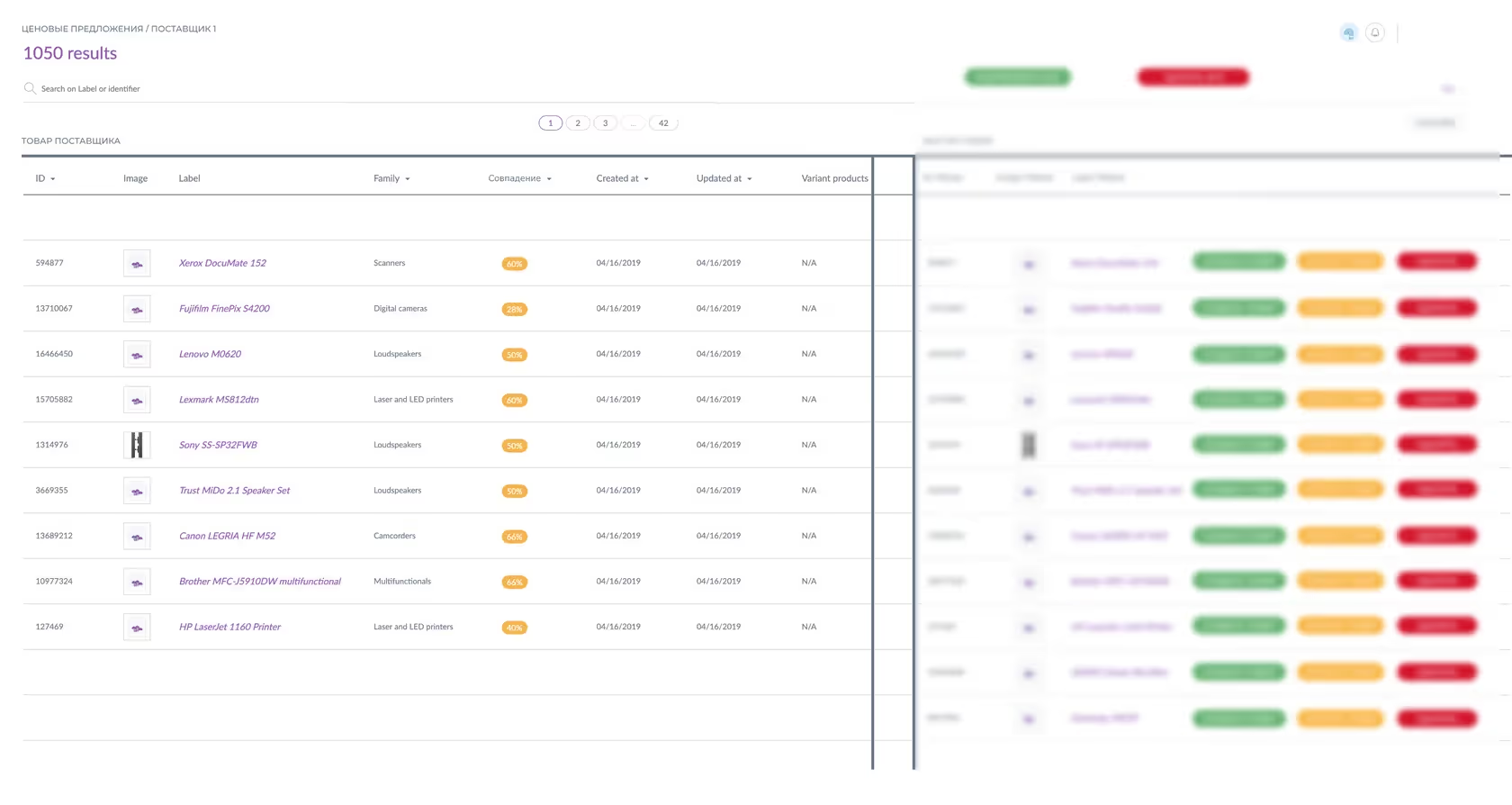
It works like this: a list of base products is entered into the PIM system. Offers (products) are received from each supplier, and the PIM system matches the attributes of incoming products against the primary ones. If there is a match of more than 90%, the PIM automatically merges them. If the match rate is below 90%, the PIM prompts the operator to merge the products after manually checking them first.
In addition, if one supplier provides a detailed product description and another provides an incomplete description for the exact same product, then when the product is merged into a single listing on the site, the full description will be displayed. If information is missing, the product description can also be supplemented with specifications provided by different suppliers.
Attribute Mapping and Merging Module
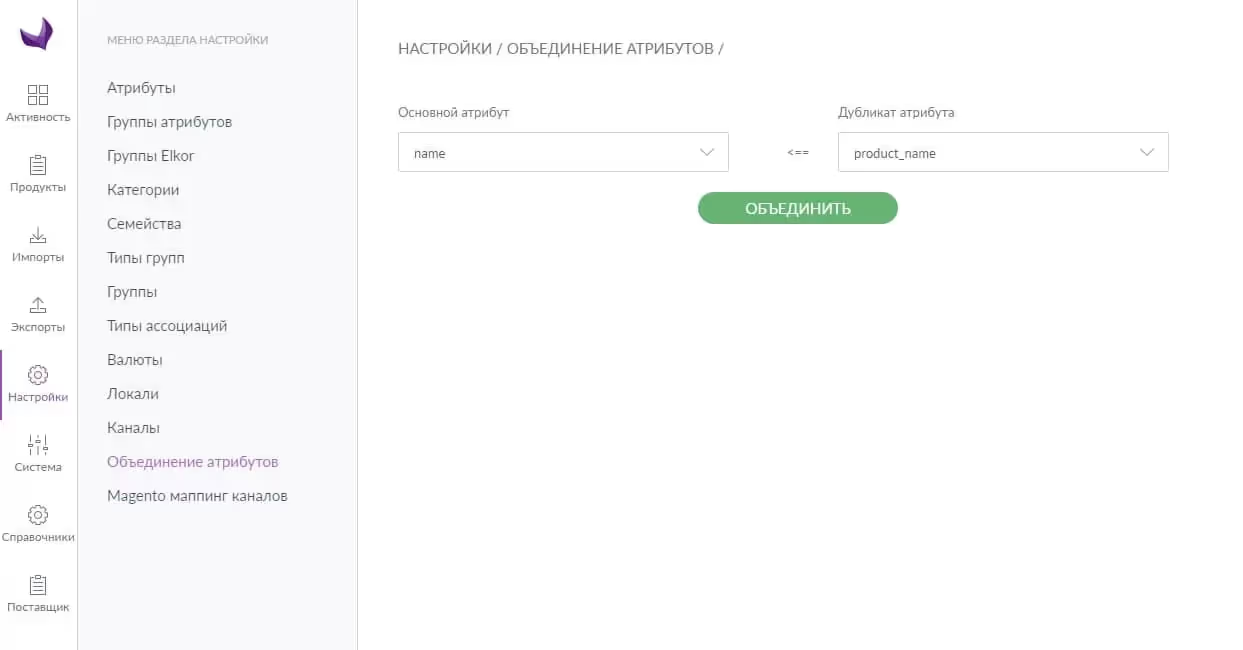
For each supplier, the name or description of the specifications for the same product may be written differently. As new offers (products) appear, the number of attributes grows, and to avoid duplicate attributes, we built an attribute merging mechanism. Its logic is similar to processing offers from suppliers.
First, a list of attributes selected as primary is imported into the PIM system. To avoid duplicate attributes, we developed a mapping module. Initially, the operator manually processes the incoming attribute stream and decides which ones to merge into one. On the next import, the PIM system resolves this automatically. Also, if the main PIM database contains two identical attributes, the operator can choose a single primary one, while all product links remain intact.
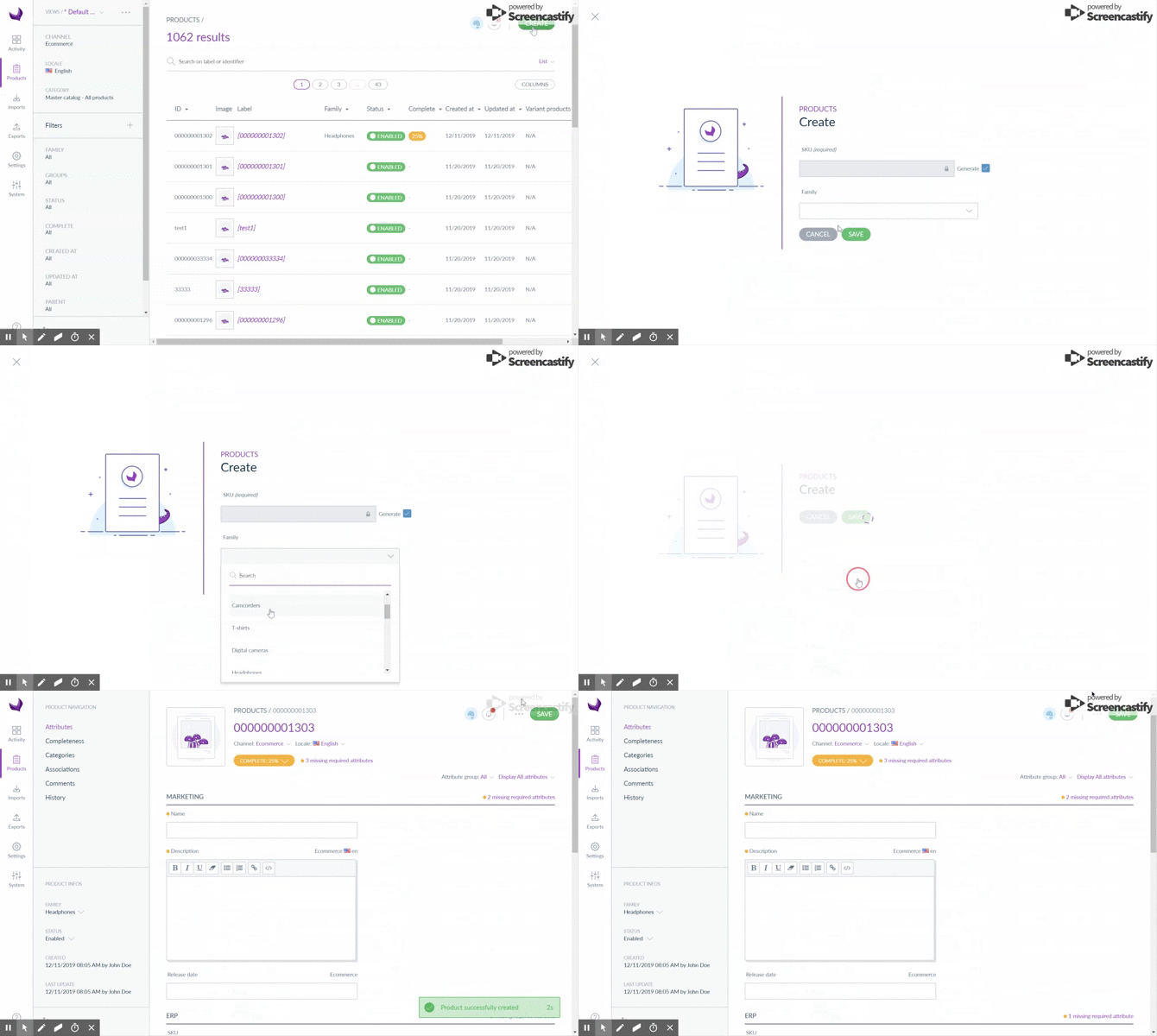
By default, product IDs in Akeneo PIM are assigned manually. In addition, the client wanted SKU generation to follow different rules for different product categories.
Our developers created a module for automatic unique ID generation. Now, when a product is added to Akeneo PIM, it is automatically assigned a unique ID based on category rules. For example, if a product falls under the Clothing category, it follows its own ID generation rule, while products in the Home Appliances category are calculated using a different rule.
Outcome
Akeneo PIM integration enabled the client to keep all product and supplier information in one place. The custom modules developed specifically for the project helped automate product ID generation, prevent duplicate attributes and products, and provide customers with the most complete product descriptions possible.