Simple is not easy

About the company

IT architecture without critical miscalculations

We build IT infrastructure with ESB and a Data Lake through loose coupling of systems: less manual control, less data loss, more controllable change.

1 Integrations and Business IT Architecture

Is your IT landscape demanding ever more investment?

2 Integrations and Business IT Architecture

Hard to assess the return on your IT investment?
3 Integrations and Business IT Architecture

Are new integrations slowing down your business scaling?
4 Integrations and Business IT Architecture

Isn't digitalization delivering the results you expected?

5 Integrations and Business IT Architecture

Are data chaos and complex links holding back your growth?

Profitability

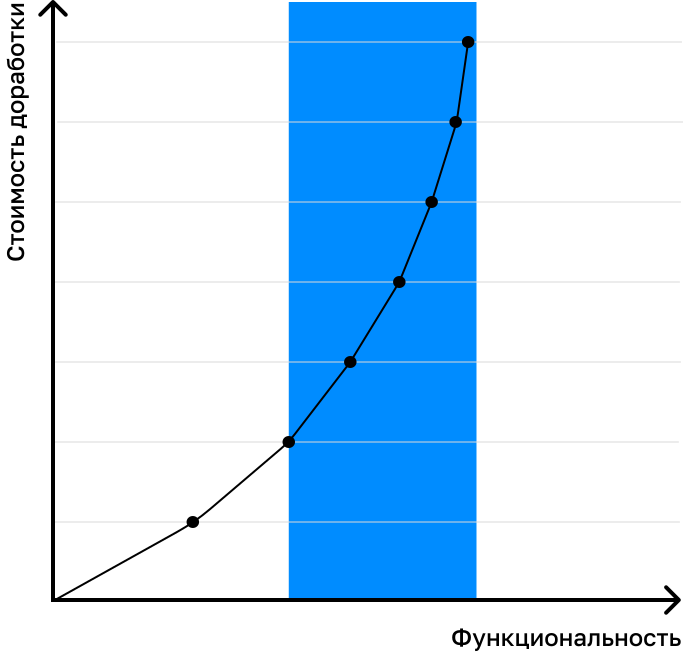
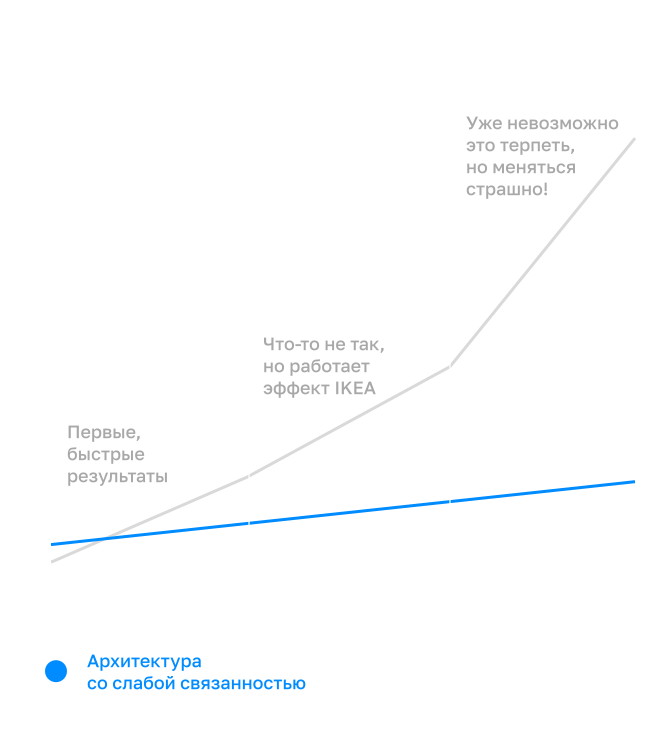
IT infrastructure miscalculations are invisible at first but costly as you grow

When systems are linked directly and without a unified architecture, running and upgrading the IT landscape becomes unprofitable: every change demands more approvals, manual control and development.
Integrations and Business IT Architecture

Efficiency

The cause of inefficient IT infrastructure is the cargo cult

A genie saw a telephone and carved an identical one from marble. The same happens in IT: it looks like proper architecture on the outside, but the exchanges, data and responsibilities stay tangled.


Integrations and Business IT Architecture
Copying the look of a solution isn't enough.
Integrations and Business IT Architecture
Without understanding the mechanics, integrations stay expensive.

The form is copied, not the mechanism

A cargo cult appears when a team copies the outward signs of a successful solution without understanding the inner mechanics of the process.

The budget grows, the problem remains

This approach drives further IT spending but doesn't remove the causes of overloads, data loss and expensive changes.

Engineering expertise is required

The high entry barrier into integration architecture requires not only choosing a tool but also understanding the links between systems.

Innovation

Integration miscalculations silently raise the cost of running IT

1

Software development cost

Any change touches more systems and requires more regression.

2

Cost of updating systems

New services take longer to connect because old links hold the landscape together.

3

Attitude to flexibility

When adopting technology gets stuck on complexity and approvals, the business stops bringing innovative ideas to IT.

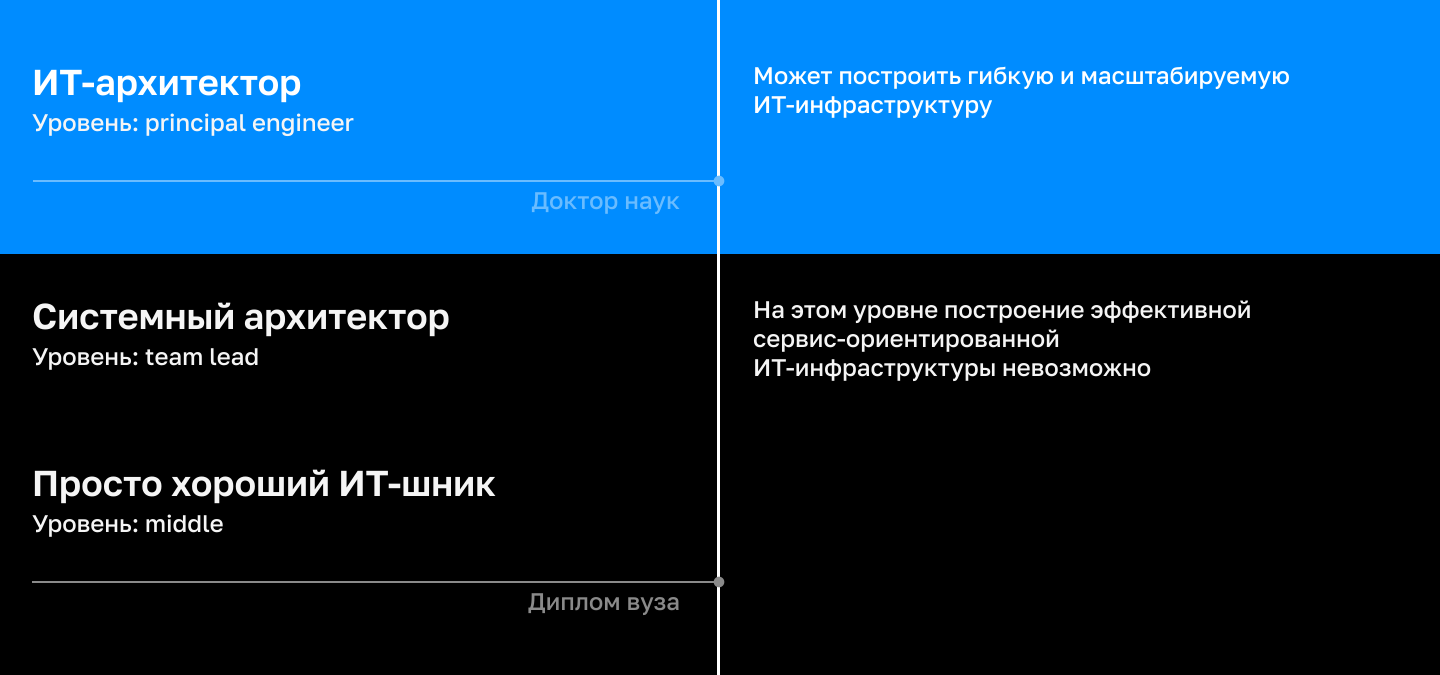
90% of large companies are here

Integrations are critical for large businesses

A single system can no longer store and run all the products, logic chains, business processes and department needs. You need an architecture where different solutions are loosely and manageably coupled.
  • There are too many software products and services for one monolithic system.
  • Logic chains and business processes must be split by areas of responsibility.
  • Different departments must manage their own changes without breaking the whole landscape.
Integrations and Business IT Architecture

Tight and loose coupling

The solution is a service-oriented IT architecture through an ESB

Simply picking a tool is a waste of time and money. Without the right integration architecture, innovation fails to solve the problems it was meant for.

Tight coupling of IT system modules

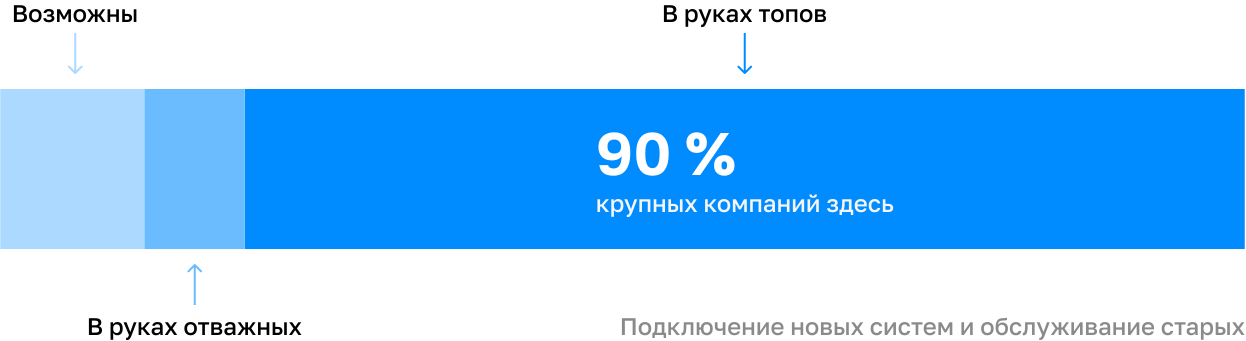
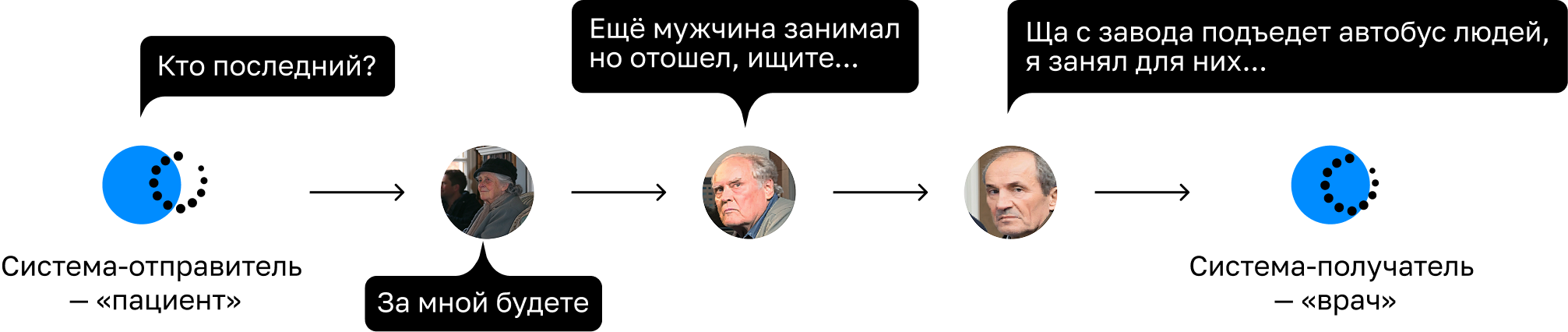
An electronic queue alone doesn't remove process chaos: after taking a ticket, you still end up in an ordinary queue. In IT this scales to hundreds of systems.
Integrations and Business IT Architecture Integrations and Business IT Architecture
  • Data loss for no clear reason.
  • Hard to prepare for peak loads: Black Friday and the New Year rush overload systems.
  • Connecting new systems and changing old ones causes unexpected failures.
  • The cost of maintaining infrastructure and connecting BI analytics keeps rising.
  • Departments shift responsibility onto one another.

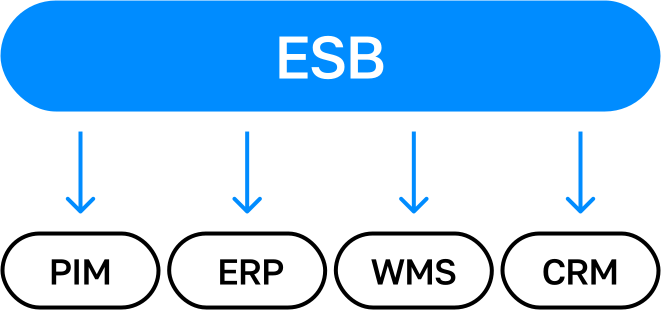
Loose coupling through a service bus

An ESB and a Data Lake let you separate responsibility, standardize exchanges and evolve the landscape without the constant risk of breaking neighboring systems.
Integrations and Business IT Architecture Integrations and Business IT Architecture
  • Systems are easy to replace.
  • Load on data sources and targets is reduced.
  • Easier to prepare analytics and connect BI.
  • Data loss in critical exchanges is eliminated.
  • New systems connect faster and cheaper.

Map of consequences

Symptoms that one new tool can't fix

How tight coupling shows up

  • Irrational load on systems: on peak days, such as Black Friday or the New Year rush, systems are overloaded and lose data.
  • The lack of a single data standard complicates analytics, blocks getting statistics promptly and hinders effective business management.
  • Connecting new systems gets harder, and changes to already connected ones often trigger sudden failures in other systems.

Why picking a tool doesn't solve the problem

  • In IT architecture, picking a tool alone is a waste of time and money.
  • Without understanding how to implement integrations correctly, no innovation can solve the very problems it was meant to fix.
  • The problem isn't the name of the ESB, broker or warehouse, but the map of flows, the data standard and the responsibility for changes.

What a business loses without architecture

  • Data loss for no clear reason.
  • Difficulty predicting and preparing for peak loads even after an upgrade.
  • Continuously rising cost of maintaining IT infrastructure.
  • Growth means connecting new systems, which costs more and takes longer each time.

What loose coupling changes

  • We use loose coupling of IT system modules through an enterprise service bus.
  • To picture it, think of a private clinic: flows are separated, responsibility is clear, and queues don't block one another.
  • Easily swap systems, reduce load, prepare data analytics, eliminate data loss and connect BI.
Integrations and Business IT Architecture

Approach

Simple, easily transferable IT solutions with measurable business value

Tell us about the problem you need to solve. We will fix the outcome, cost and timeline in documents. An initial review usually takes 1-2 weeks.

Andrey Putin, founder and CEO of KT.Team

Cases

Integration projects where architecture changed the economics of the IT landscape

View all integration case studies

Open source stack

An open-source stack for ESB and data flows

We use open-source solutions, so clients cut license costs without the risk of restrictions under various countries' laws.

Graphical studio for building connectors

A simple, flexible low-code platform that is part of Salesforce, a company with over $30M in annual revenue. We use the Community Edition.

Version control and access rights configuration

An open-source web tool for the DevOps lifecycle. More than 30 million registered users.

Database and warehouse

A powerful open-source object-relational database system under active development for more than 35 years.

Storing, analyzing and searching logs

Solutions for enterprise security, observability and search built on the Elasticsearch platform, used by thousands of companies.

Dashboards on the status of data flows

A data visualization and analysis system that works out of the box with a wide range of data sources.

If you have preferences, we can use other products too, including paid-license ones.

A typical workflow

You can run the full implementation or order a single stage

We designed the process to give you maximum value: from a map of systems and flows to operations and monitoring.

1. Designing a loosely coupled architecture

  • Analysis of the current AS IS IT architecture
  • Working out exchanges for key entities
  • TO BE architecture and a transition roadmap
  • Tool recommendations and documentation

2. Migrating the most critical data flows

  • BPMN diagrams of processes and flows
  • Deploying ETL, the warehouse, logging and monitoring
  • Connector configuration
  • Documentation and team training

3. Migrating the remaining flows to populate the data warehouse

  • BPMN diagrams of flow processes
  • Connector configuration
  • Log collection and integration monitoring
  • Documentation and handover to operations

YouTube

We talk about integrations on our YouTube channel

View All

1C integrations through ESB

Buses vs. message brokers

Contacts

Let's Discuss Your Project

Leave your current contact details and describe your task. We will come back with clarifying questions and a proposal for the next step.