The AWS article starts with a gardener
He told the assistant that his garden beds drain quickly, that he uses only organic fertilizers, and that his petunias struggled in the heat.

Four AWS case studies cover assistant memory, agentic RAG, voice, and ISO 42005—and what determines an AI agent’s fate in a company.
In a short period, AWS published four case studies of agentic systems: a personal assistant with memory for AgentCore and OpenClaw, a voice concierge for an airline, agentic retrieval with LangChain and Bedrock Knowledge Bases, and an analysis of ISO/IEC 42005:2025.
In all four cases, the agent's value comes from what surrounds the model.
A model can be connected through an API in a day, while memory, search, backend seams, and risk management take months to build.
At these points, the project either delivers results or quietly shuts down.
He told the assistant that his garden beds drain quickly, that he uses only organic fertilizers, and that his petunias struggled in the heat.
Three weeks later, he asks about watering, and the assistant remembers nothing.
Every conversation starts from scratch, and the user has to repeat the context.
The problem is the lack of memory about the person, not the quality of the answers. The solution is straightforward.
The memory layer extracts durable facts and preferences from conversations, stores them separately from the chat history, and adds them to the context for the next request. The model stays the same. The business implications are direct.
Consider a sales manager's assistant that remembers the customer has already rejected one plan and is waiting for 1C integration.
By our estimate, it saves several minutes per interaction, and over a quarter those minutes add up to weeks of work.
An assistant without memory works like a search bar with good manners.
There is also an obligation:
This is an architectural requirement that must be built in before launch.
The second analysis describes an error that is difficult to notice.
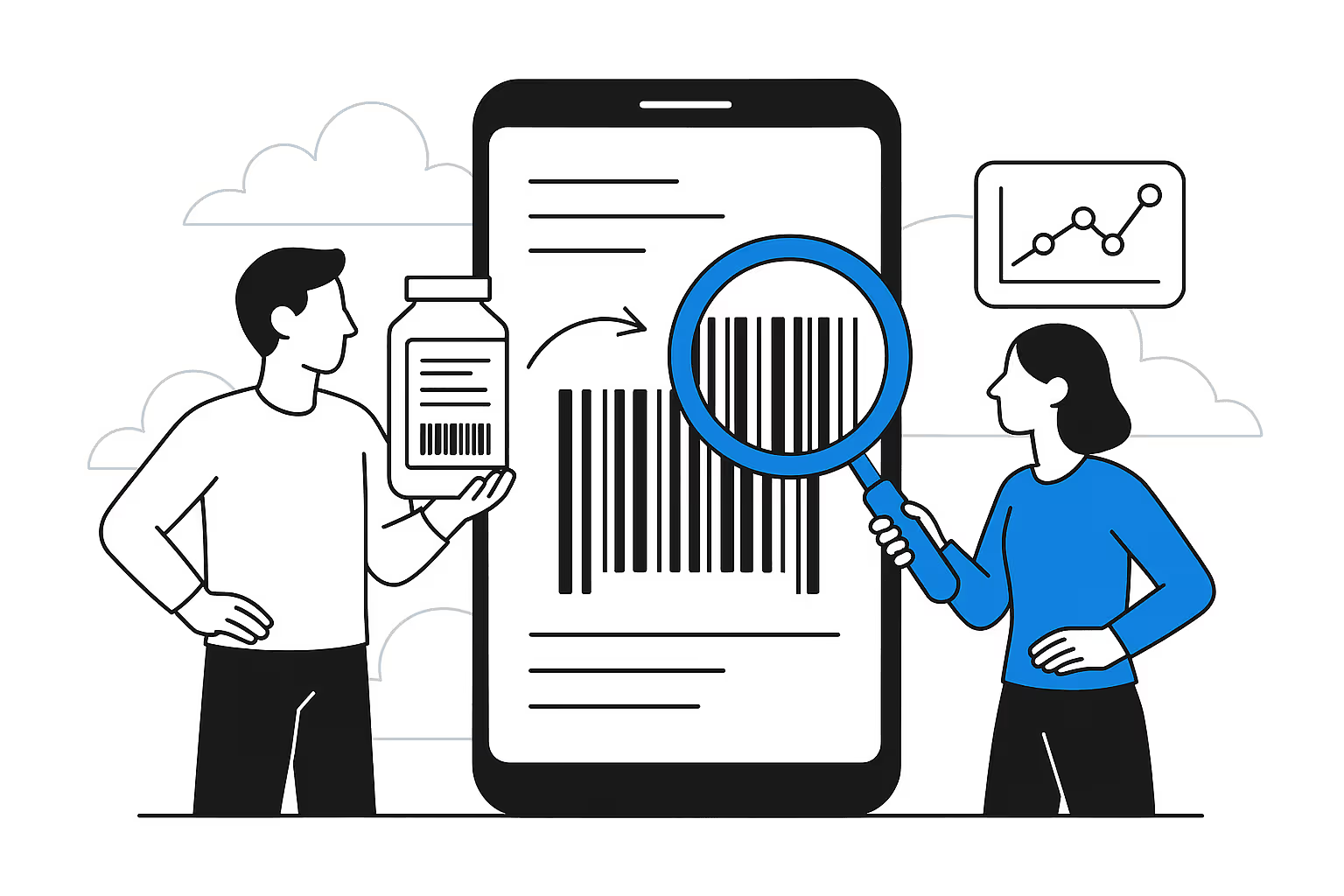
The user asks to compare two products across three parameters.
In effect, he asked six questions: each product across every parameter.
Classic RAG turns a phrase into a single vector, and that vector averages all the intentions.
Search runs without errors, relevance scores look respectable, and the answer is polished.
The retrieved fragments cover only part of the question, and the model fills in the gaps.
Agentic retrieval solves this through decomposition.
The agent breaks the question into subqueries, searches each one separately, checks what is missing, and only then assembles an answer. The cost: more index queries and higher latency.
The trade-off is worthwhile when an error in comparing plans or specifications costs more than an extra second.
Data structure helps with decomposition.
If a catalog has a taxonomy and facets, the dimensions for splitting are already defined: brand, type, and characteristics.
The agent splits the question by attributes that the business has long defined in PIM, so it does not guess.
Our working hypothesis for catalog projects is that RAG delivers significantly more with a carefully designed data model than with “simply uploaded PDFs.”
We check it during every implementation.
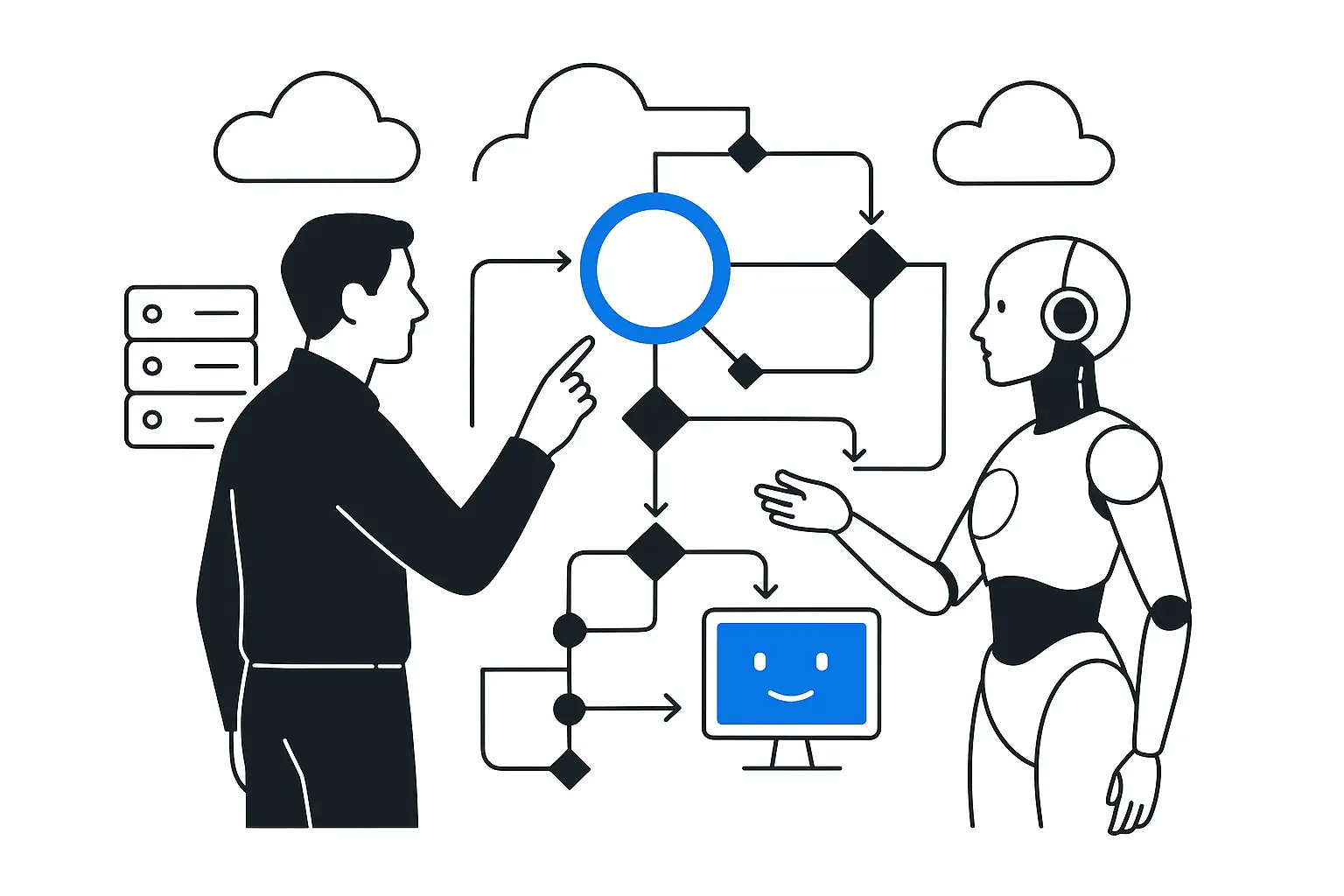
The third case is an airline voice concierge. The passenger says “move me to a window seat” or “what’s happening with the flight delay” without opening any screens. From the outside, this looks like a task for a speech model, but AWS itself lists the engineering challenges. Audio streams in both directions. The thread of the conversation spans many exchanges. The agent accesses existing systems without being tightly coupled to them. All of this must withstand peak traffic before the holidays.
The voice layer is thin; the main work lies in integration: flight status lives in one system, seat availability in another, and booking in a third. If the agent calls them through an explicit seam, such as an MCP server or an event queue like Apache Kafka, any system can be replaced without rewriting the agent. If the agent is wired directly into an external API, the first backend update breaks the assistant, and engineers fix it overnight. The passenger sees one phrase and one confirmation.
Behind them are streaming transport, dialogue-state management, and carefully designed backend contracts. A simple result for the user requires complex engineering underneath.
The fourth text focuses on ISO/IEC 42005:2025, a standard for assessing the impact of AI systems. AWS starts with a figure: global AI investment reached $581.69 billion in 2025, while adoption is advancing faster than it did for PCs and the internet.
The researchers of the AI Adoption Initiative also highlight the idea of a “missing link”: intermediaries stand between those who create models and those who use them.
They turn AI capabilities into practical deployments, while national strategies often overlook them. These intermediaries are the integrators.
A paper-based impact assessment is useless if the system has no log: who asked, what data went to the model, what it answered, and which tool it called.
A practical way to obtain such a log is to route all model requests through a single gateway with personal-data masking and auditing.
We build such frameworks as LLM & Security Gateway, and in our experience, they give reviewers a ready source of evidence.
Across four AWS analyses, an agent stops being a toy after four engineering decisions.
It remembers the customer, searches every part of the question, connects to backends through replaceable seams, and leaves an audit trail.
Model selection comes last on this list: it will be replaced within a year, while memory, seams, and the log will remain.
There is one metric: the time from a request to a useful result. An assistant that makes users repeat context consumes that time. An agent that breaks during a CRM update resets it. An agent unknown to the security team is unlikely to survive scaling. A project that does not move the metric remains theater, and it is shut down along with those who launched it.