GenAI: the model is raw material; customization determines the result

AWS maps GenAI customization, explaining why Claude or Llama access alone delivers no results and wastes business money.

  • Model access solves nothing on its own
  • Where companies most often lose money
  • The solution spectrum in practice
  • Infrastructure around the model matters as much as the model itself

Model access solves nothing on its own

  1. AWS has published an analysis of the generative AI customization spectrum, from prompt engineering to custom models on Bedrock.

  2. An uncomfortable point for many CTOs: API access to Anthropic Claude, Amazon Nova, or Llama does not deliver results by itself. Bedrock gives every AWS customer equal access to a dozen models and infrastructure for chatbots, coding assistants, document processing, and autonomous agents.

  3. The difference between a company that gets measurable results from GenAI and one that gets a demo for an internal presentation lies in how the model is integrated into the business process.

  4. This solution requires an engineering team capable of choosing the right lever for the task.

Where companies most often lose money

A common mistake is jumping straight to a fine-tuned custom model when prompt engineering with well-designed context would have been enough. Fine-tuning costs weeks of engineering time, requires a labeled dataset, and needs retraining whenever business rules change. The opposite mistake is handling a complex domain with bare prompting, without RAG or fact-checking: outputs become unstable, and the business loses trust in AI after a single failed release.

In both cases, the wrong lever extends TTU (the time from launch to the first useful result).

Assess where AI can deliver impact in your process

The solution spectrum in practice

The Databricks Genie and Amazon Quick case for automating inventory replenishment shows the right choice of lever: demand forecasting once required manually tuning the model for every SKU, covering tens of thousands of items and becoming outdated faster than planners could reconcile supplier spreadsheets. Here, a foundation model forecasts demand across the entire catalog without item-level tuning—the task is solved through RAG and data orchestration, without fine-tuning.

At the other end of the spectrum is Abnormal AI, which protects email for more than 25% of Fortune 500 companies.

Their agents process billions of operations daily, and real-time phishing detection requires more than the model’s semantic reasoning: it needs a computational scratchpad—a sandbox for aggregating data, verifying information, and analyzing code on the fly.

Here, the right level of customization is infrastructure around the model: Bedrock AgentCore Code Interpreter gives the agent an executable coding environment separate from the prompt text.

The Ninth Wave case in open finance is a third example of the same principle.

Each bank exposes an API with its own field names and deviations from the FDX standard; reconciling formats once took specialists weeks of work with correspondence and spreadsheets.

The problem is solved by a data normalization layer built on top of the model—integration engineering.

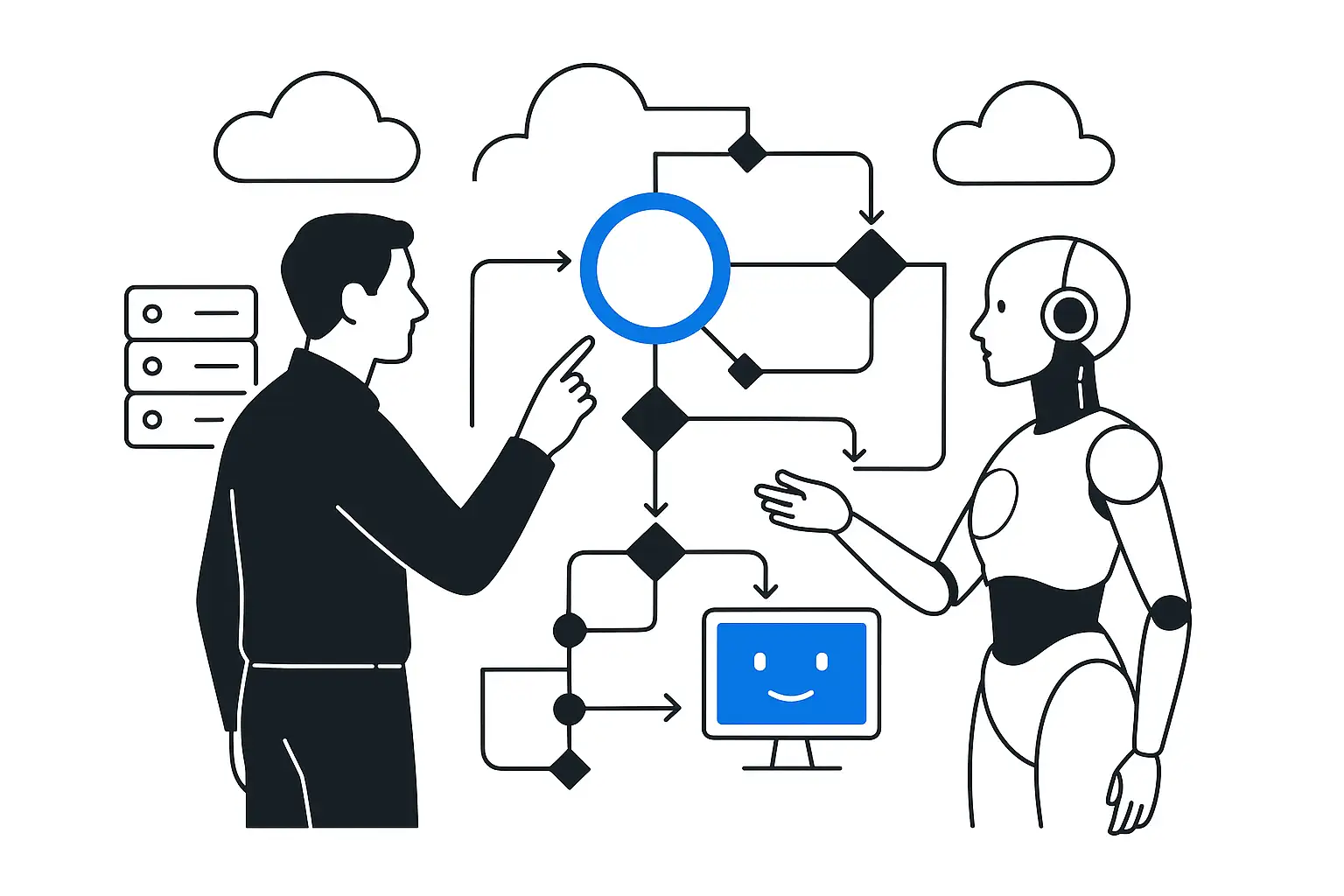
The model remains constant in this task; the surrounding infrastructure does the work.

Infrastructure around the model matters as much as the model itself

One category of tasks is not directly covered by the customization spectrum but consumes just as much engineering time: managing agent access.

When an agent must act in GitHub or Slack on a user’s behalf, it needs an OAuth grant tied specifically to that user (session binding).

Teams used to build this themselves: token storage, access revocation, and agent activity auditing. AgentCore Identity provides ready-made infrastructure for this layer.

The key point is that this layer is mandatory for production, not optional—a fact every company moving an agent beyond a demo environment should remember.

The same logic underpins LLM & Security Gateway in an AI-native integration environment: without it, every agent gets direct access to internal systems without a central point for auditing or revoking permissions, turning a CRM connection into a perimeter vulnerability. An agent that works safely and predictably with corporate data does not appear by itself—it requires authorization, logging, and scope-limiting layers designed separately from the prompt and the model.

The selection rule

Before writing a prompt or commissioning fine-tuning, answer honestly: can prompt context solve the task, can RAG using current company data solve it, or is the business logic so specific that fine-tuning is essential? Each successive lever costs more than the previous one and is justified only when the previous lever has demonstrably failed.

The model is raw material; an engineer creates the money-making solution by knowing where to stop on this spectrum and building access and audit layers around the agent before it reaches production.

Discuss the article: GenAI: The Model Is Raw Material; Customization Delivers Results…

Enter your email or phone number so we can get back to you.

Send via: