WorkSwarm 0.2.6: Memory Agents Learn to Self-Repair

WorkSwarm 0.2.6 adds RSI and persistent agent sessions, revealing why eval loops matter more than feature lists.

  • What was released on September 10
  • The problem: an agent without memory works like an intern on their first day
  • How RSI and Perpetual Session work mechanically
  • SwarmFlow 2.0, a cluster for third-party agents, and a marketplace

Key point

The open-source WorkSwarm AI agent framework has gained persistent sessions and recursive self-improvement: agents no longer lose context between tasks and can revise their own instructions. For business, the implication matters more than the feature showcase: an LLM agent with memory costs less to operate because it does not reload context on every run.

We examine what changed, where this agentic stack creates savings, and why self-improvement without an evaluation loop turns into a risk rather than an advantage.

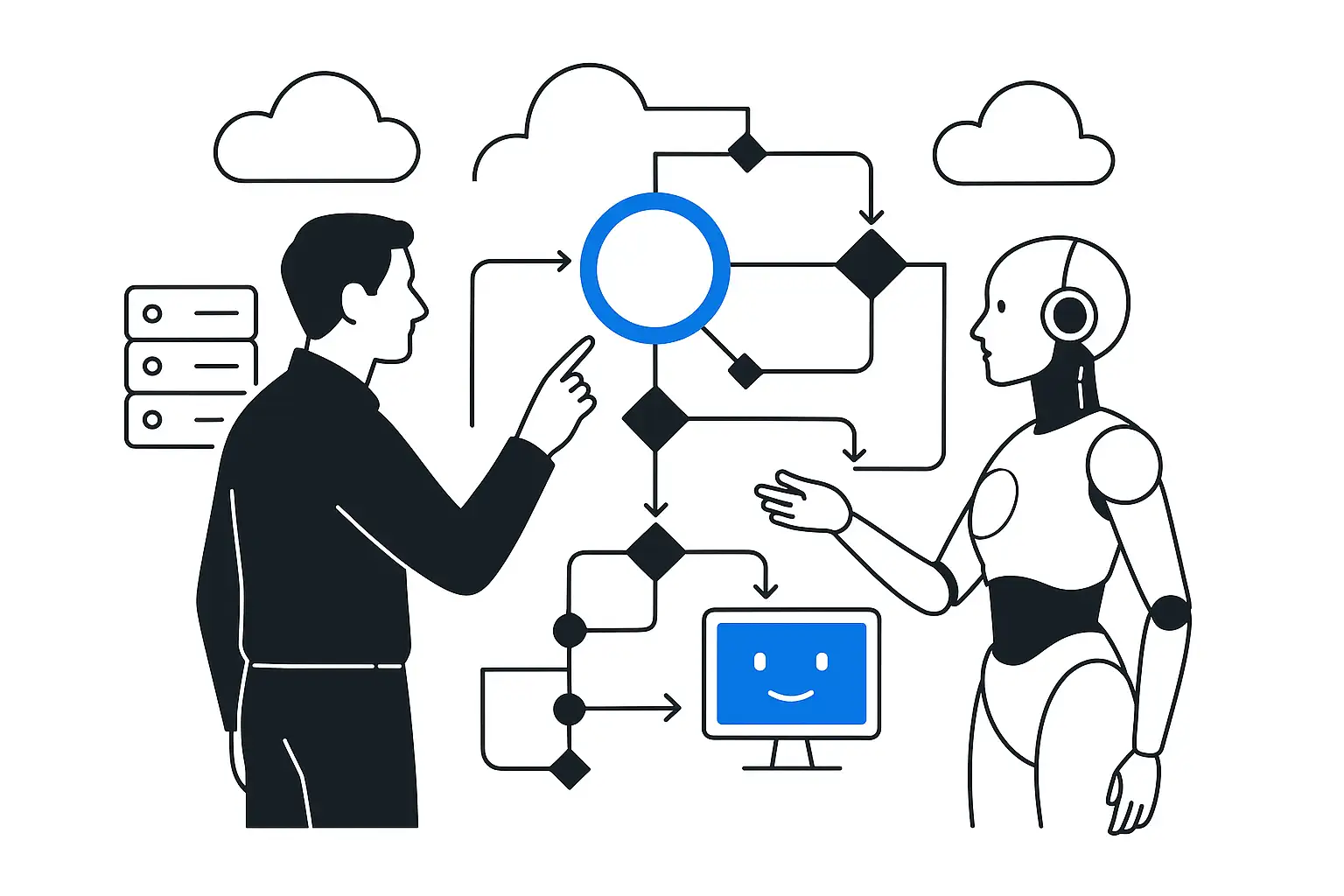
What was released on September 10

  1. On September 10, 2026, the openJiuwen community released WorkSwarm 0.2.6 with recursive self-improvement (RSI), persistent sessions, SwarmFlow 2.0, cluster mode for third-party agents, and a plugin marketplace.

  2. Behind the feature list lies one fact: the agent framework is no longer a script restarted from scratch for every task. It is becoming a system with memory and the ability to configure itself.

  3. For a company paying for results rather than demos, this raises a question: who verifies that the “improved” agent has actually become better?

  4. The release comes with a companion agent-core 0.1.17.post1 release, issued separately “for swarmflow 2.0.” The framework and runtime are updated in sync, which in itself signals a mature process.

  5. A little earlier, agent-core 0.1.16.post7 fixed a specific bug in context recovery during streaming (GitHub issue #854, mirrored in GitCode !2459, closes #1663).

  6. A minor detail, but fixes like this determine whether an agent reaches production: a connection drop during generation is a common reason agent pipelines fail with real users.

The problem: an agent without memory works like an intern on their first day

Most agent-swarm frameworks still rebuilt context for every task: tools were connected, rules explained, and history lost. The company pays twice for this: in tokens spent on reinitialization and in engineer time spent repeatedly explaining what the agent already “knew” yesterday. WorkSwarm’s Perpetual Session removes this source of cost: the session does not reset between tasks, so the agent retains context and accumulated decisions.

How RSI and Perpetual Session work mechanically

RSI in WorkSwarm is pluggable optimization across two dimensions: Harness (the execution environment—tools, memory, and access rules) and Artifacts (the agents themselves, prompts, and workflow graphs). The system measures how the agent handled a real task from the task feed and uses that feedback to modify either the environment or the agent itself, without human involvement in the loop.

Previously, the cycle was “build - evaluate - fix”

It lived in the mind of the developer who manually fine-tuned prompts. Now it is built into the runtime.

Assess where AI can deliver impact in your process

SwarmFlow 2.0, a cluster for third-party agents, and a marketplace

Cluster Mode Support for Third-Party Agents allows agents outside the openJiuwen ecosystem to join a shared cluster. The Expert/Plugin/Connector/Skill marketplace shows that a market for ready-made agent components has already formed: openJiuwen is betting on an ecosystem built on top of its runtime rather than on a closed product.

What This Means for Business

A self-configuring agent with long-term memory sounds like a cost saving. In practice, the first question is not “how intelligent is the agent?” but time to use: how long it takes from assigning a task to obtaining a verified result. Self-improvement without observability is a source of risk: the agent may “improve” toward a metric that rises on synthetic tasks but falls on real customer data.

Notably, the agent-core PR checklist requires design review, test coverage, interface review, and documentation updates before merge. Behind an apparently simple feature lies engineering discipline that is invisible from the outside. Simple results rarely come without a rigorous process behind the scenes.

How this is addressed technically

A company that wants an agentic stack rather than a toy needs three things: a tool integration protocol (MCP has already become the de facto standard for connecting agents to external systems); a gateway that controls which data each model—Anthropic Claude, GigaChat, YandexGPT, or Qwen—can see and logs every call (LLM & Security Gateway); and an eval stack that separates genuine agent improvement from metric drift.

KT.Team builds such stacks in Python, using RAG to access company data and MCP to integrate with internal systems—the exact components without which RSI turns from a release feature into a balance-sheet risk.

Conclusion

RSI and Perpetual Session turn the agent framework into a memory-enabled system that persists beyond a single task. Adoption is determined not by the feature list but by the company’s ability to measure whether the agent’s self-improvement was genuine or merely a more confident way to make mistakes. A memory-enabled agent deployed without an evaluation loop repeats its mistakes faster and with greater confidence.

Discuss the article: WorkSwarm 0.2.6: agents with memory learn…

Enter your email or phone number so we can get back to you.

Send via: