Yegge Shuts Down Gas Town: Lessons for AI Orchestrators

Steve Yegge shut down his multi-agent orchestrator, Gas Town. Why autonomy without gates delivers no results—and what is needed instead.

  • What happened
  • Process reliability matters more than the model
  • The layer around agents
  • Simple does not mean easy

What happened

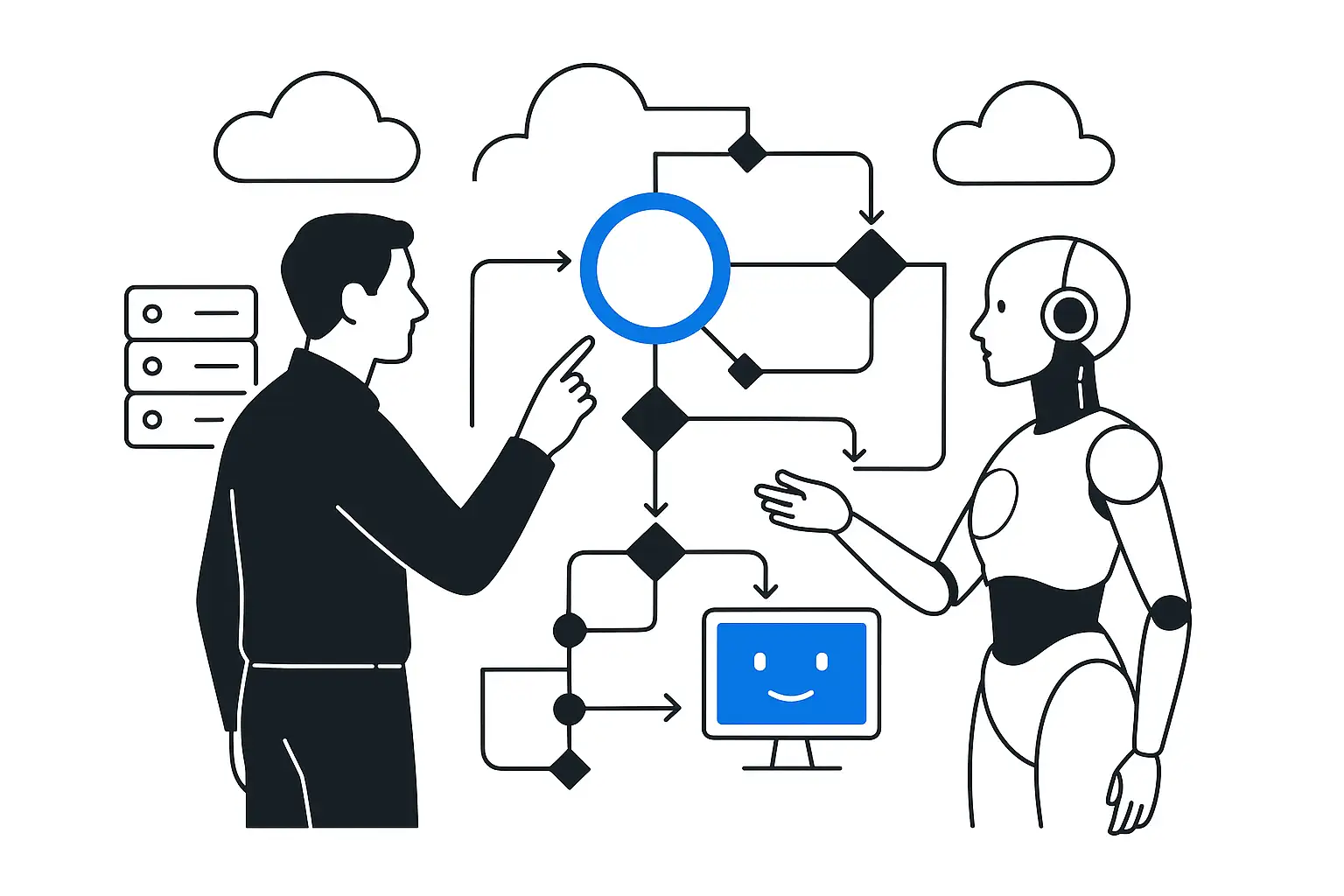
  1. Steve Yegge—one of the most prominent advocates of autonomous AI agents—shut down Gas Town, his multi-agent orchestrator for writing code.

  2. Several thousand dollars a month on commercial coding agent subscriptions, months of development—and the only thing actually built with this orchestrator was the orchestrator itself. Not a single task beyond it. Researcher Dan

  3. Lu independently described the same problem with similar tools: they abandon tasks unfinished even though the resulting code is usually correct. Gas Town was supposed to build a pipeline of several AI agents that distribute development subtasks among themselves without constant human involvement.

  4. The idea is clear: less manual work means features reach production faster.

  5. In practice, the orchestrator built only itself.

  6. Yegge is not the only one to hit this ceiling: the same conclusion was reached independently by

  7. Dan Lu, while analyzing other “ultra-vibey” orchestrators on his website.

Process reliability matters more than the model

GPT, Claude, and other models can write correct code for individual tasks today—the problem is not the models. An agent operating without external quality control accumulates errors over the long run.

Every orchestrator step—a tool call, file edit, or commit—carries a small probability of deviating from the goal.

Without external review, these deviations accumulate into a task that is formally complete but in practice does not work or breaks something nearby.

This follows directly from time to use: the metric measures one thing—how quickly and how often a tool brings a result to a usable state.

An impressive demo does not count

An orchestrator that spends thousands of dollars a month and months of team effort for the sole result of building itself fails this test.

Assess where AI can deliver impact in your process

The layer around agents

  1. The working approach is a layer around AI agents, with explicit checkpoints after every significant step.

  2. Automatic gates stop the pipeline when tests fail or a contract is violated—the agent cannot continue building on a broken foundation.

  3. A clear protocol separates the roles of agents and tools into distinct contracts instead of relying on one monolithic “orchestrator” that writes code, reviews it, and decides on deployment by itself. MCP is better suited to this than custom wrappers: the boundary between agent and tool becomes explicit and testable, making it verifiable in CI.

  4. A separate issue is the agent’s access to external systems and data.

  5. The broader the range of tasks an orchestrator performs unsupervised, the higher the cost of an access error: committing to the wrong place, deleting the wrong thing, or leaking the wrong secret. LLM & Security Gateway addresses exactly this by controlling which calls to which systems the agent is allowed to make, regardless of what it considers necessary at the moment.

Simple does not mean easy

From the outside, a pipeline that takes a task to production without drama looks boring: commit, gate, deploy. Behind that boredom is engineering work: a contract between the agent and the system, checks at every step, and a well-designed failure scenario. This work is what distinguishes a demo from a tool people use every day. Gas Town bet on scaling autonomy and skipped work on pipeline reliability—scale did not replace it.

Conclusion

Businesses pay for results that reach users. The number of agents in the pipeline and the size of their subscriptions have nothing to do with that outcome. An AI agent without gates and an explicit tool interaction protocol remains a demo generator: it cannot be scaled to real tasks.

Yegge spent thousands of dollars and months confirming what engineers already know: autonomy without external validation does not speed up delivery—the review is merely postponed, and a person still ends up doing it by hand.

Discuss the article: Yegge shut down Gas Town: a lesson about…

Enter your email or phone number so we can get back to you.

Send via: