For managers
Answers questions like "which orders are overdue by more than five days and who is responsible": gathers data from 1C and shows the responsible people and the source of each number.

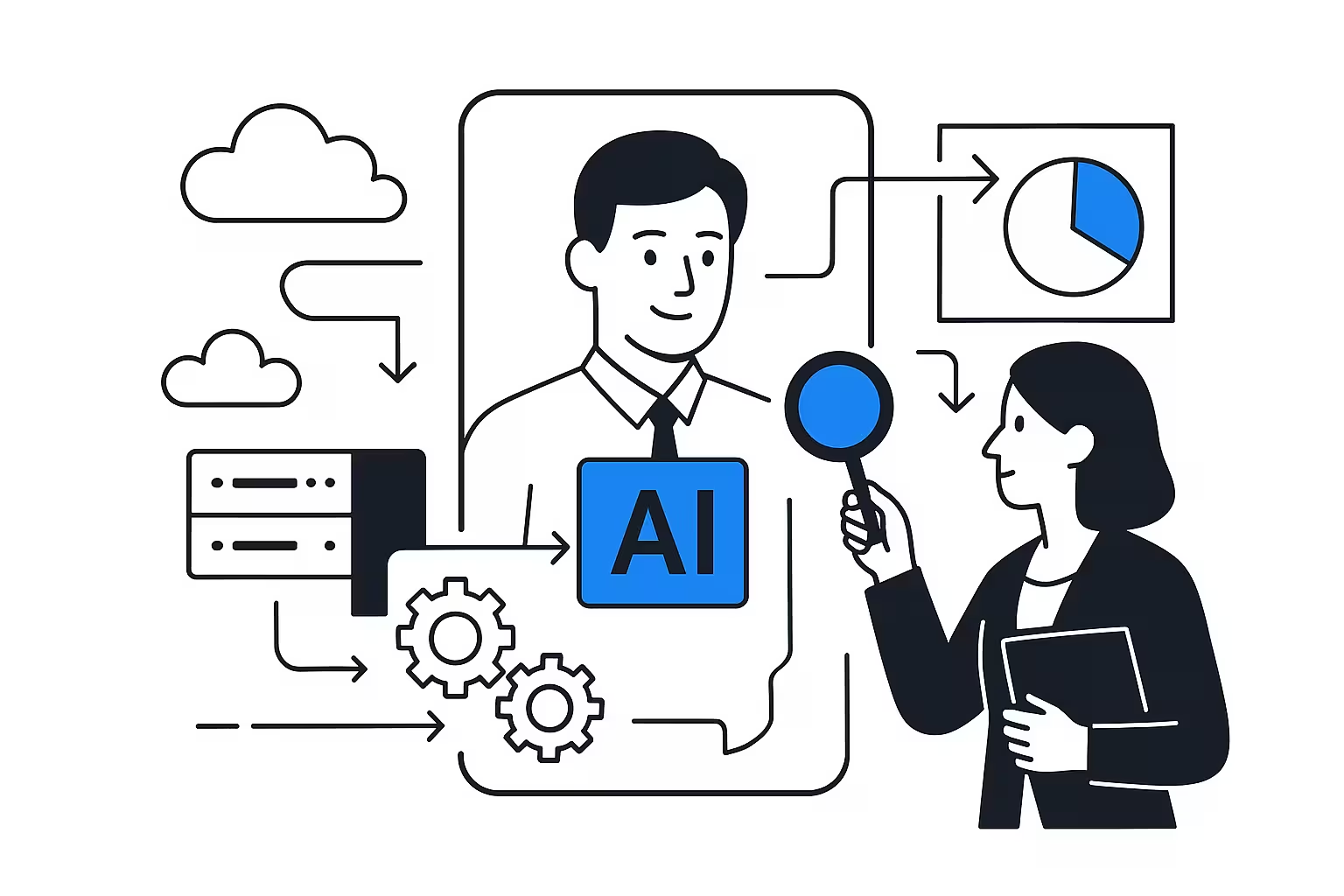
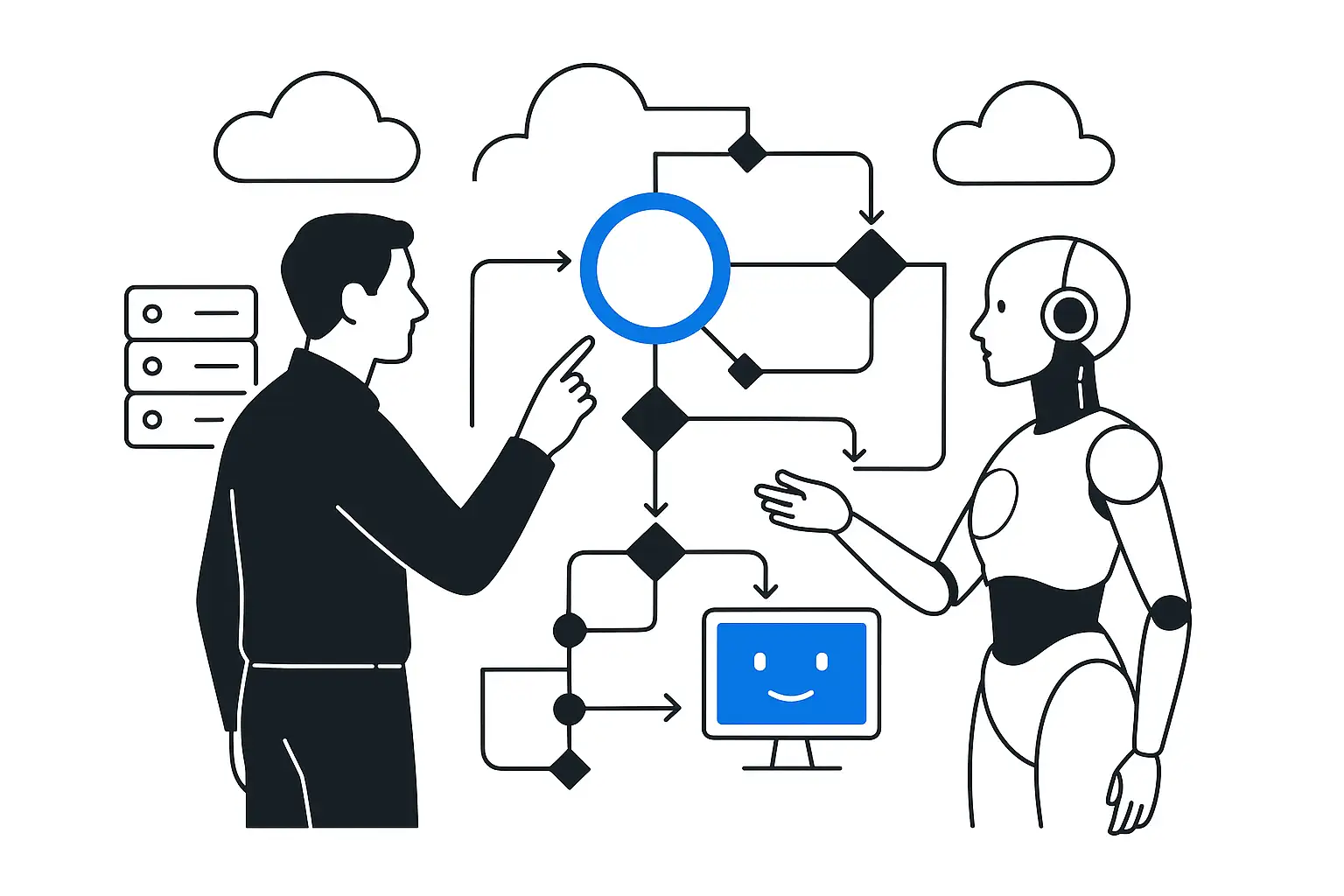
Employees give instructions in plain language; the agent reads data and performs approved 1C operations with permissions, logs, and human approval.
Our clients













The wording is based on real request examples; the exact set of scenarios is determined by the 1C configuration, roles, and company policies.
Answers questions like "which orders are overdue by more than five days and who is responsible": gathers data from 1C and shows the responsible people and the source of each number.
On the request "show documents without originals," it finds them and explains why the reconciliation statement does not match, with links to 1C objects.
Prepares a supplier order based on the approved need: fills in a draft, checks required fields, and sends it to the responsible person for approval.
Provides a single controlled access layer to 1C for employees and other AI agents: tools, permissions, limits, and logs are managed centrally.
Agent checked
In the example, one item is unavailable. The reservation has not changed; a manager's decision is required.
Suggested action
Prepare a partial reservation; send the unavailable item for clarification.
After confirmation: 1C · The approved tool creates the reservation; the log records the parameters, result, and responsible person.
Trace: Source: the order card and available 1C stock. Sample only; the toolset depends on the configuration.
A manager writes: "Find stock for the item across three warehouses and prepare a reservation for the customer." The agent first clarifies missing parameters, then reads the permitted data and shows the result with links to 1C objects. For writing, it creates a draft or requests approval from the responsible employee.
Critical operations can be limited by amount, document type, department, legal entity, and execution time. The interface can be Telegram, a corporate messenger, a web chat, a voice assistant, or a panel inside the working app. The same controlled toolset can be connected to multiple interfaces and specialized agents.
The tool set is designed for the specific configuration, roles, and business rules of the company.
Finds documents, reference data, stock, settlements, and statuses. Explains the result in clear business terms and shows the source.
It pulls data from multiple 1C objects, applies approved calculation rules, and returns a table, a brief conclusion, or a file.
Fills in a document draft, inserts allowed details, checks required fields, and sends it to the user for confirmation.
After permission checks and confirmation, it creates, edits, or posts a document through a dedicated tool with predictable parameters.
Stops the operation in case of a mismatch, limit breach, or missing data, and routes the task to an employee with an explanation.
Provides a shared set of tools for an AI accountant, AI estimator, procurement agent, or internal executive assistant.
Request → check → tool → 1C → result
User
AI agent
Control
Tools
Accounting
| System / layer | Scope of responsibility |
|---|---|
| User interface | Accepts text or voice, shows the found data, an operation draft, warnings, and a confirmation request. |
| AI agent | It understands intent, clarifies parameters, selects the allowed tool, and produces a clear explanation of the result. |
| MCP server for 1C | Publishes strictly defined tools with input parameters and structured output. Validates the format of each call. |
| Security gate | Checks identity, role, organization, data scope, limits, approval route, and operation idempotency. |
| 1C | Stores accounting data, executes the configuration's business logic, and returns the actual status of the created or modified object. |
| Responsible employee | Approves exceptions and operations with financial, legal, or material consequences. |
MCP defines a consistent way to describe the tools an AI client can call. For 1C, we design an MCP server or an adapter over the system's available interfaces: HTTP and web services, OData, extensions, external processing, a bus, or managed file exchange. The 1C:Enterprise platform officially supports HTTP services, web services, and OData access; we choose the approach after checking the configuration and write requirements.
The security gate is a separate component of KT.Team architecture. The language model does not connect directly to the 1C database and does not receive tokens or credentials: it only selects the tool and forms the parameters. Before execution, the gate checks the identity of the user or calling agent, the available organization and department, the operation type, record scope, limit, repeat call, and whether approval is required. The agent acts within the rights of a specific 1C user, and every call and result are saved in the log.
MCP makes tools easier to reuse, but it does not replace business permissions or operational control on its own. The protocol specification requires validating input parameters, enforcing access control, limiting call frequency, confirming sensitive actions, and keeping logs; we record these requirements in the architecture and acceptance criteria. The same principle of controlled access is implemented across the entire company LLM & Security Gateway a unified gateway through which employees and agents work with language models.
An AI assistant usually means a question-and-answer mode: find data, explain a metric, suggest where to look. An agent is different because it performs allowed actions, preparing and posting documents through tools with permission checks and confirmation. The layer described here covers both modes: you can start with answers to questions and later enable operations.
AI accountant knows source accounting procedures, reconciliations, taxes, and exceptions in the accounting process. AI estimator Works with estimates, materials, substitutes, orders, shipments, and actual consumption. Both can use the same 1C MCP and shared security gate, but receive different tools, instructions, roles, and approval routes. KT.Team's AI solutions catalog is on the hub AI for business.
In the OSNO-VA financial agent case we moved calculation logic from spreadsheets into SQL, MCP, and executable skills. The agent calls verifiable tools and gets a reproducible result. We apply the same engineering principle to access to 1C.
The agent relies on the structure of the accounting system itself: 1C implementation, customization, and integration we treat as a separate direction. If most of the routine comes from exchanging documents with counterparties, start with EDI - 1C integration with Diadoc or 1C with SBIS, and the agent then works on top of the established document workflow.
Cases
We take one repeatable task with a clear owner: search, reporting, verification, or operation preparation.
We define 1C objects, input parameters, a structured response, errors, and a secure connection method.
We define roles, data scope, limits, confirmations, retry handling, and log contents.
We run standard and exception scenarios on known data, then accept the process against pre-agreed criteria.
After stable read access, we add drafts and confirmed writes; new agents use the same controlled layer.
FAQ
Yes, if access is built as a controlled layer rather than a direct model connection to the database. The agent calls narrow tools on behalf of a specific user, the security gate checks permissions and limits before the operation runs, and 1C remains the system of record.
The agent operates within the existing 1C user permissions: role, organization, department, and data scope are checked before each tool call. The log stores the original request, the invoked tool, parameters, confirmation, and result, so any operation can be reviewed afterward.
There is no ready-made extension for any 1C system. The tool set depends on the configuration, platform version, available interfaces, and company rules; we choose the approach after reviewing the specific system.
No. Each tool has a narrow purpose and separate permissions. You can start with read-only access to specific reference data and documents.
We choose the architecture based on data requirements: inside the company's perimeter, in dedicated infrastructure, or in an approved cloud. In any case, 1C secrets are stored outside the language model.
Yes, if that channel is allowed by company policy. Before a sensitive action, the user sees the parameters and confirms the operation in the specified workflow.
No. MCP defines tools for the AI client, while the adapter connects to a supported 1C interface: an HTTP service, web service, OData, an extension, or another agreed connector.
Yes. They can use a shared technical layer, but receive different tool sets, policies, and context.
The cost depends on the number of processes, the tool set, and the depth of automation: reading and reporting are cheaper, while confirmed writes require more checks. We start by breaking down one request and define the pilot scope before estimating. You can estimate the rough cost of AI implementation in the calculator on the AI hub for business, and the full breakdown of cost items and TCO is in the article how much an AI agent costs.
| Question | What determines the decision |
|---|---|
| Which configuration and version? | Available interfaces, extensions, and update procedures |
| What actions are required? | Read, draft, or write; permissions and approvals |
| Where does the agent run? | IT and information security requirements for data, the model, and infrastructure |
| How do we accept the work? | Scenario effort, errors, execution cost, and reproducibility by another team |
First step
Show us an employee's repetitive task. We will break it down into data, tools, permissions, approvals, and the first-run acceptance criteria.
Review date: 17.07.2026