Weak connectivity
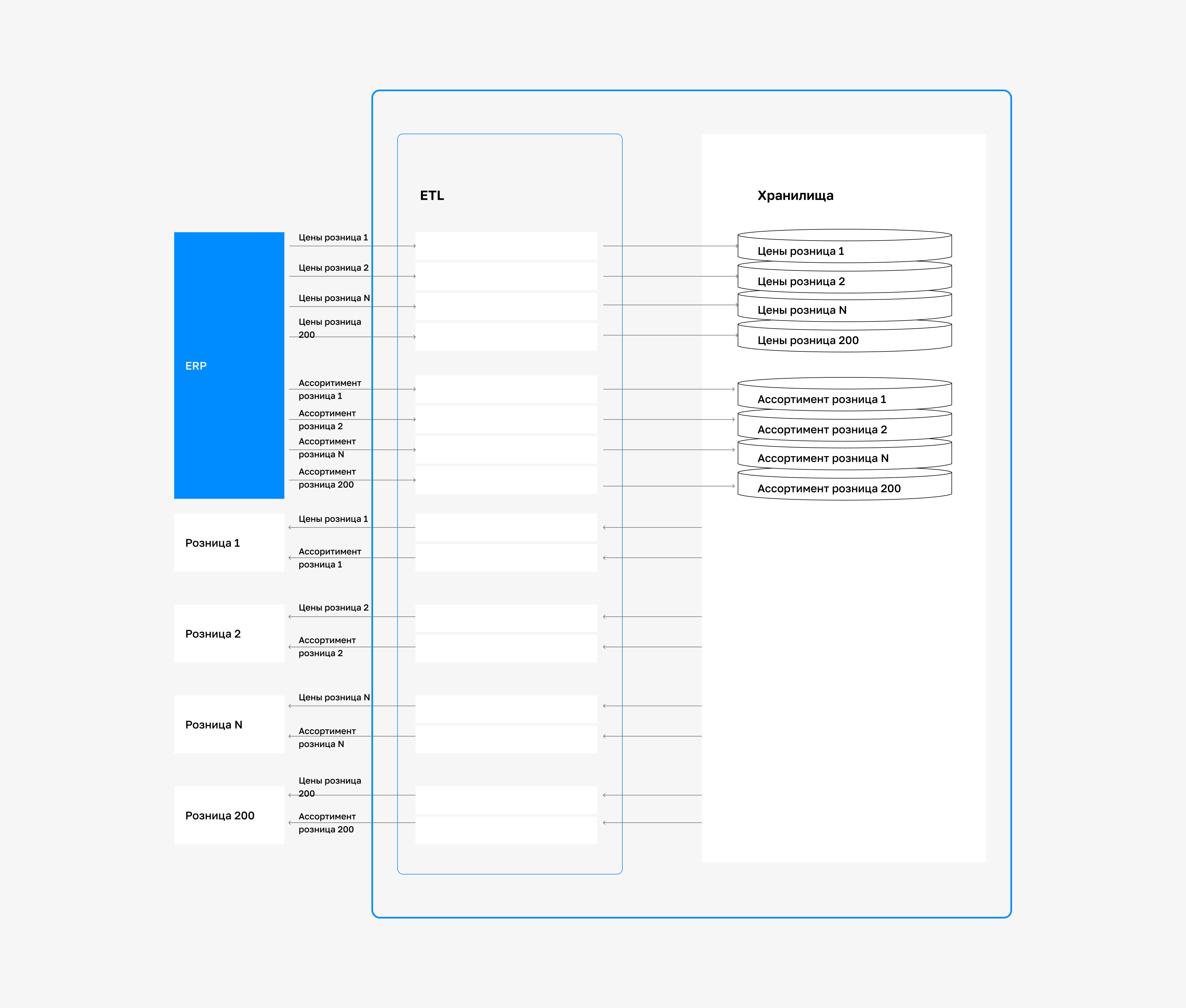
1C and Bitrix know each other only through a queue contract, not through direct calls. This is one of two architectural factors that DORA statistically highlights as significant.

Tools
1C and Bitrix integration via ESB and queues: catalog, prices, inventory, orders, CRM leads with idempotency—enterprise node versus point-to-point.
Our clients














Resellers sell 'configuration of the 1C-Bitrix exchange module'
: one direct website↔1C connection hardcoded in the box. KT.Team views it differently—
Bitrix and Bitrix24 are a node in an enterprise 1C landscape, and integration with them is part of a data bus. Catalog, pricing, stock, orders, and CRM data flow between 1C and Bitrix via ESB & Message Queues, not over fragile point-to-point connections.
This way the node is easy to replace in parts, and your data and exchange logic remain yours.
For the CRM loop, this connects Bitrix CRM with 1C through the same bus, not as a separate workaround.
1C and Bitrix know each other only through a queue contract, not through direct calls. This is one of two architectural factors that DORA statistically highlights as significant.
Queue buffers peaks and survives 1C or website downtime: events don't get lost and catch up with the receiver after recovery, without crashing the exchange
Integration logic lives in the bus, not in the Bitrix box. You can take the system and integrations without vendor lock—client sovereignty, not contractor dependency.
Every message is traced: you see what's delivered, what's stuck, and where retries occur. Integration is managed by SLO and error budget, not patched blindly.
1C↔Bitrix integration event lifecycle
Source event
Publish to queue
Idempotent processing
Delivery to recipient
We assess 1C configurations, catalog volumes, load peaks, current exchange and security requirements — and tell you straight where out-of-the-box exchange falls short.
Define events, message schemas and queue topics - in Apache Kafka or another bus for your stack and ESB integrations.
Write producers and consumers with idempotency keys, retries and order control; connect Bitrix and 1C through a contract, not through tweaks inside the box.
Queue monitoring, alerts and error budget: exchange operates as a service with observability, not as a fire-and-forget setup
Standard Bitrix-1C exchange via CommerceML is synchronous: on large catalogs and frequent updates it hits performance limits and timeouts, and a failure midway through export breaks data integrity. The engineering boundary is to move exchange to a custom REST API on top of queues: the site and 1C exchange events asynchronously, each message is idempotent, and the bus controls order and retries, not the monolith. This is the same loose coupling principle — queues and APIs instead of modifying the box, which you can't update without pain later.
Cases
| Criterion | Reseller: exchange module configuration | KT.Team: node in ESB landscape |
|---|---|---|
| Coupling | point-to-point, 1C and website tightly coupled | loose coupling through queue and contract |
| Load peak | synchronous exchange times out and brings down the system | Queue buffers, receiver catches up at its own pace |
| Retry and failure | risk of duplicates and lost events | idempotency and retries with backoff |
| Ownership | logic locked in the box | Exchange stays yours, no vendor lock |
| Scale | One website ↔ one 1C | Multiple 1C systems and receivers on one bus |
| Operations | If it works, don't touch it | Observability, SLO, error budget |
Turnkey exchange
We'll analyze your 1C cycle, catalog volumes and peaks, design exchange through ESB and queues with idempotency, retries and order control - and deliver a solution that stays yours, without Bitrix vendor lock
Discuss 1C ↔ Bitrix ExchangeReview date: 08.07.2026