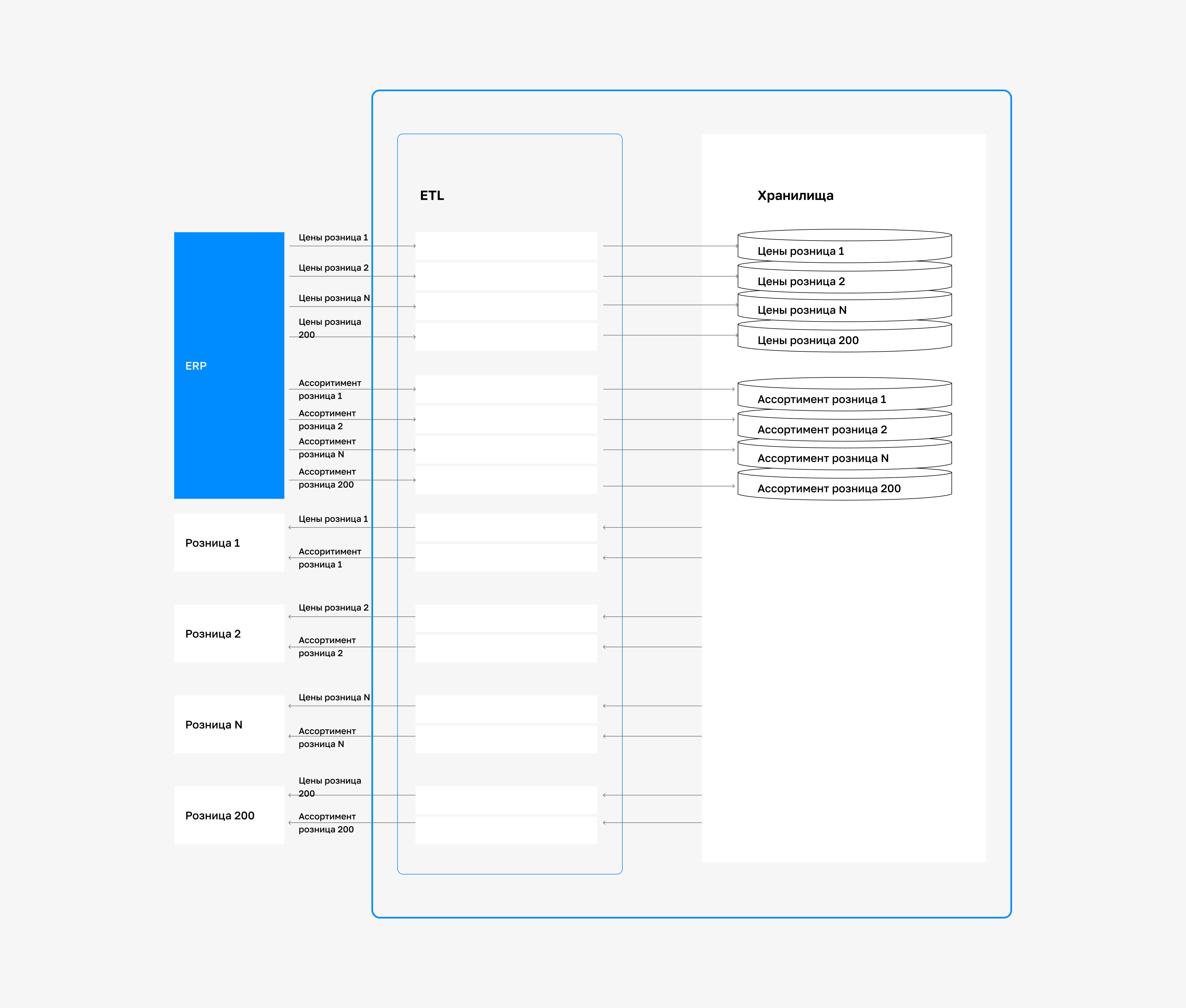
A single API for 200+ 1C:Retail instances
- Integrations became fault-tolerant and transparent
- Built a unified API to connect 200+ 1C:Retail locations

Solutions
Eliminate monolithic 1C: standard core, microservices, and ESB. One-click updates without specialist dependency.
Our clients














If your 1C has become a monolith—constant database, format, and exchange errors, heavy updates where you're afraid something will break, and your business depends on one 1C specialist who holds all the logic in their head—this can be fixed without rewriting from scratch. KT.Team de-monolithizes custom configurations for mid-market and enterprise companies in three steps: refactor to standard 1C, extract customizations into separate services, and connect systems via ESB with loose coupling.
Result: one-click updates, localized customizations, independence from a specific team, and positive ROI instead of maintenance costs for the old system. Our staff includes 110+ specialists; we have 30+ integration projects behind us; a unified API has connected 200+ 1C:Retail systems.
We decompose the logic implemented in custom configuration and restore the system to standard 1C.
Required customizations move to separate microservices; obsolete ones are disabled. The 1C core remains standard and updateable.
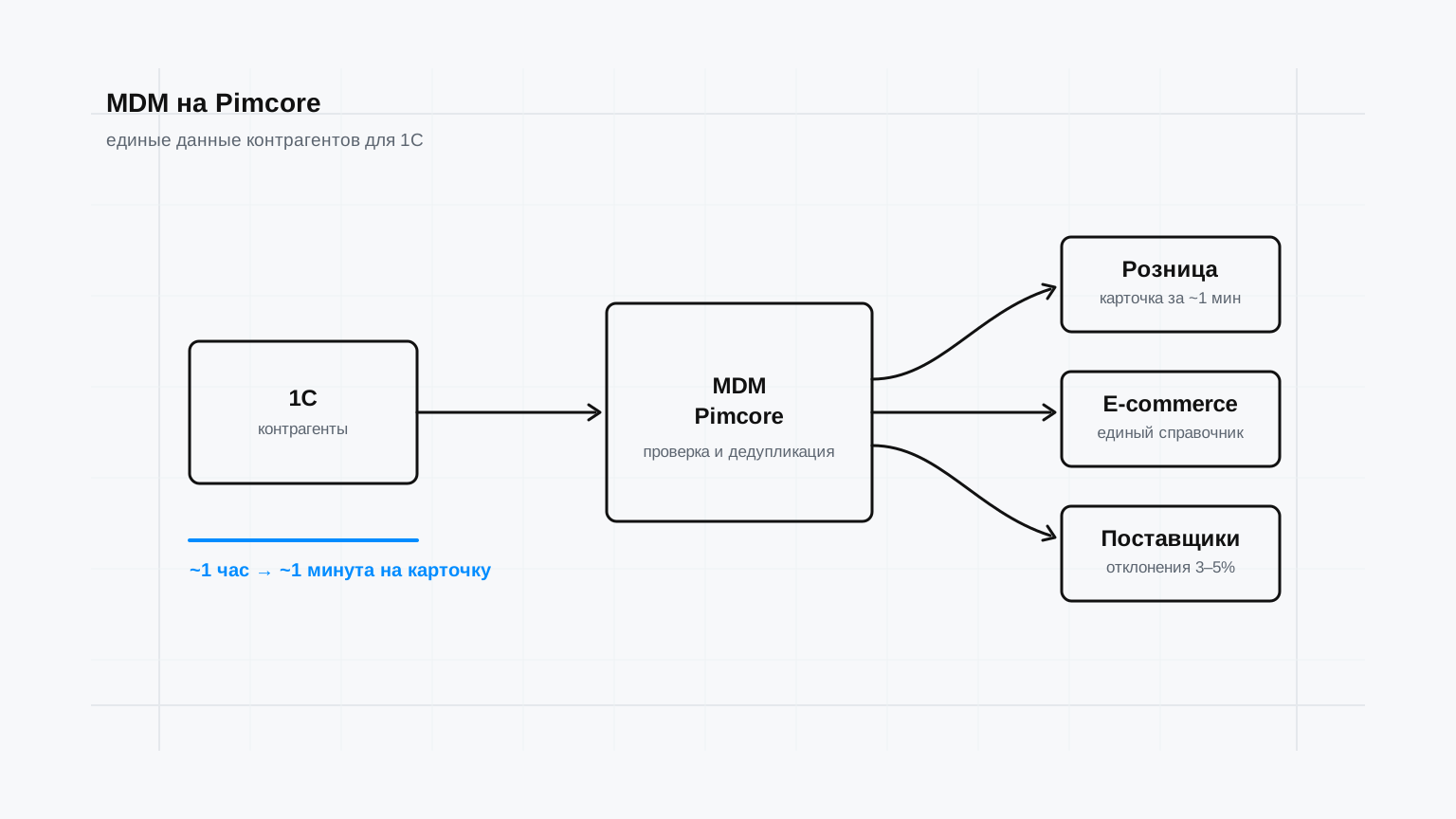
System exchanges are routed through the enterprise bus with loose coupling—no data loss, no additional overhead.
Cases
FAQ
After standardization, the 1C core updates smoothly with a single click. Customizations live in separate microservices independent of the core structure, so new 1C releases don't break integrations or business logic.
We start with a configuration audit and integration map, then decompose implemented logic, move it into microservices, and transition exchanges to the ESB bus. Timeline depends on customization scope and number of systems; we work iteratively, not via big bang migration.
We take reversible steps: first a pilot flow on a separate circuit, then expansion. We isolate customizations in services, validate exchanges on the bus with guaranteed delivery, so the transition doesn't stop your business.
Integration connects 1C to external systems; de-monolithization changes 1C's architecture itself so updates and customizations stop being a risk. Specific scenarios—on dedicated pages 1C marketplace integration, 1C marketplaces and 1C systems and services integration.
For CIS ESBs with REST integration to 1C, we use DATAREON; in an electrical equipment manufacturer project (EKF), we compared four ESBs—DATAREON, Mule, Talend, and WSO2—and chose Mule for the target architecture. We select tools based on the circuit: ESB Services and 1C integration via ESB.
Free consultation
We'll define the problem scope, assemble the solution and tools, and provide a plan and next steps. Implementation can be done with us, another integrator, or your own team.